
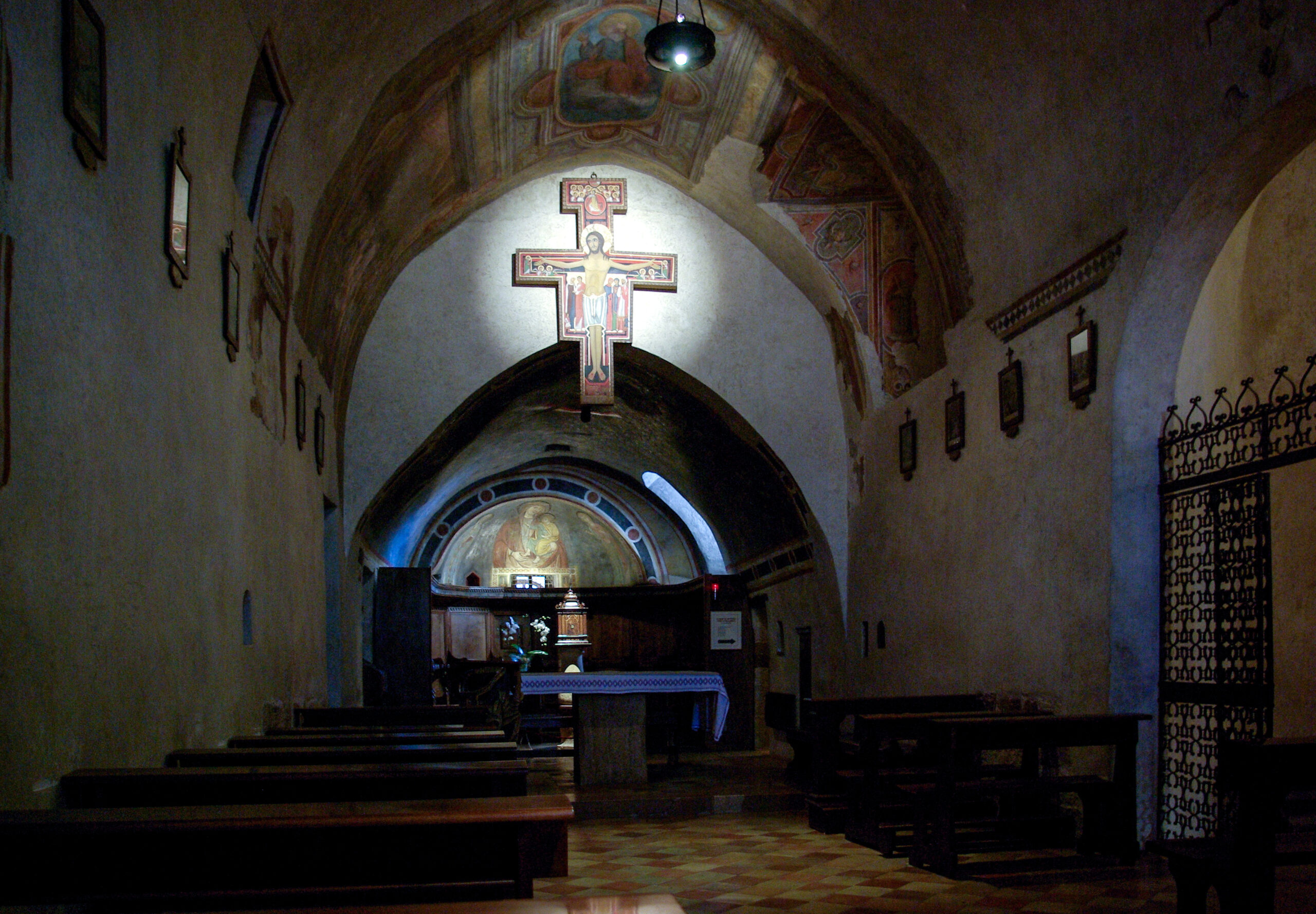
The tradition of San Damiano recalls that St. Clara, who was seriously ill, prayed before the vessel that guarded the Eucharist when the troops threatened the monastery. The memory explains its iconography with the ostensory, although the object described by the ancient sources was a tabernacle or silver pixid.
The threat over San Damiano
The memory is located in the monastery of San Damiano, where Clara and the Poor Sisters lived since the beginning of the 13th century. At a time of grave danger, troops at the service of the emperor approached the compound. Clara was sick, but she asked to be taken to the refectory door. There he fell down in prayer before the silver container containing the Eucharist. The community attributed to that petition the withdrawal of the attackers and the protection of the monastery. The narrative belongs to the life of the saint and does not describe a physical change of the sacramental species.
What the sources of the Church say
St. John Paul II recalled in 1993 that later iconography usually represents Clara with an ostensory. He said, however, that the historical scene transmitted the show before a silver tabernacle placed next to the threatened door. Benedict XVI returned to the episode in 2010 and noted that the sources on Clara include ancient biographies and the testimonies of the canonization process, started a few months after his death. The Pope presented the event as an expression of his faith in the real presence of Christ.
The ostensory in the iconography of Santa Clara
The custody or strenuous became the most recognizable visual attribute of Santa Clara. This image immediately communicates its Eucharistic trust, but it should not be projected without nuances over 1240: the Gothic or baroque ostensoria of many paintings is not necessarily the object that was in San Damiano. The distinction between iconography and historical data allows us to appreciate tradition without turning devotional art into a photograph of the episode.
Ecclesial reception and documentary degree
The pontifical reception is clear: two Popes have evoked memory within catechesis and official commemorations about Santa Clara. This is evidence of their place in the spiritual tradition of the Church. It does not amount to saying that there is a transformed host, a material analysis or an independent decree that defines all details as a verifiable physical fact. This is why the map classifies it as an Eucharistic hagiographic account with pontifical reception.
San Damiano and the Clarian Spirituality
San Damiano is not just the scene of danger. There matured a contemplative life sustained by poverty, fraternity, praise and intercession. John Paul II wrote that Clara's whole life could be understood as thanksgiving. The Eucharist thus appears not as a defensive amulet, but as the center of an existence offered to God and to the service of the sisters.
Spiritual feeling
The memory invites Christ to come into fear without making prayer an automatic guarantee of temporary security. Clara did not handle the sacred as a magic force: he fell down, begged and trusted. For the believer, his gesture unites worship, responsibility for the community and hope. The Eucharistic faith is then verified in peace, mercy and daily surrender.
Place on the map
The marker points San Damiano Sanctuary · Assisi. The coordinates identify the ecclesial place that preserves or contextualizes memory; they do not seek to locate an exact point of the episode when sources do not allow it.
Sources consulted
- Saint John Paul II · Letter to the Clarisas, August 11, 1993.
- Benedict XVI · General Audience on Saint Clara, September 15, 2010.
- International exhibition associated with San Carlo Acutis, source of departure tested and subject to the indicated causals.
Para orar
Lord Jesus, present in the Eucharist, give us the humble faith of St. Clare. In the hours of fear, teach us to seek you without superstition, to intercede for those who have been entrusted to us and to respond to evil with peace, courage and charity. Amen.
Image credit
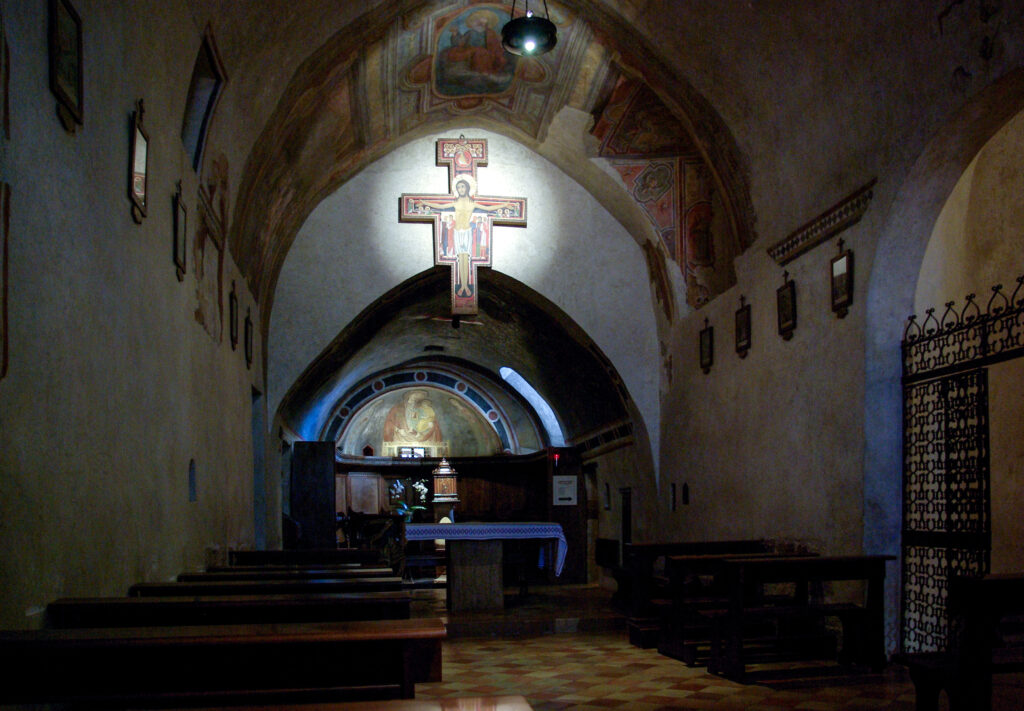
Santuario de San Damiano, Asís. Berthold Werner / Wikimedia Commons, dominio público. File and license in Wikimedia Commons.
