
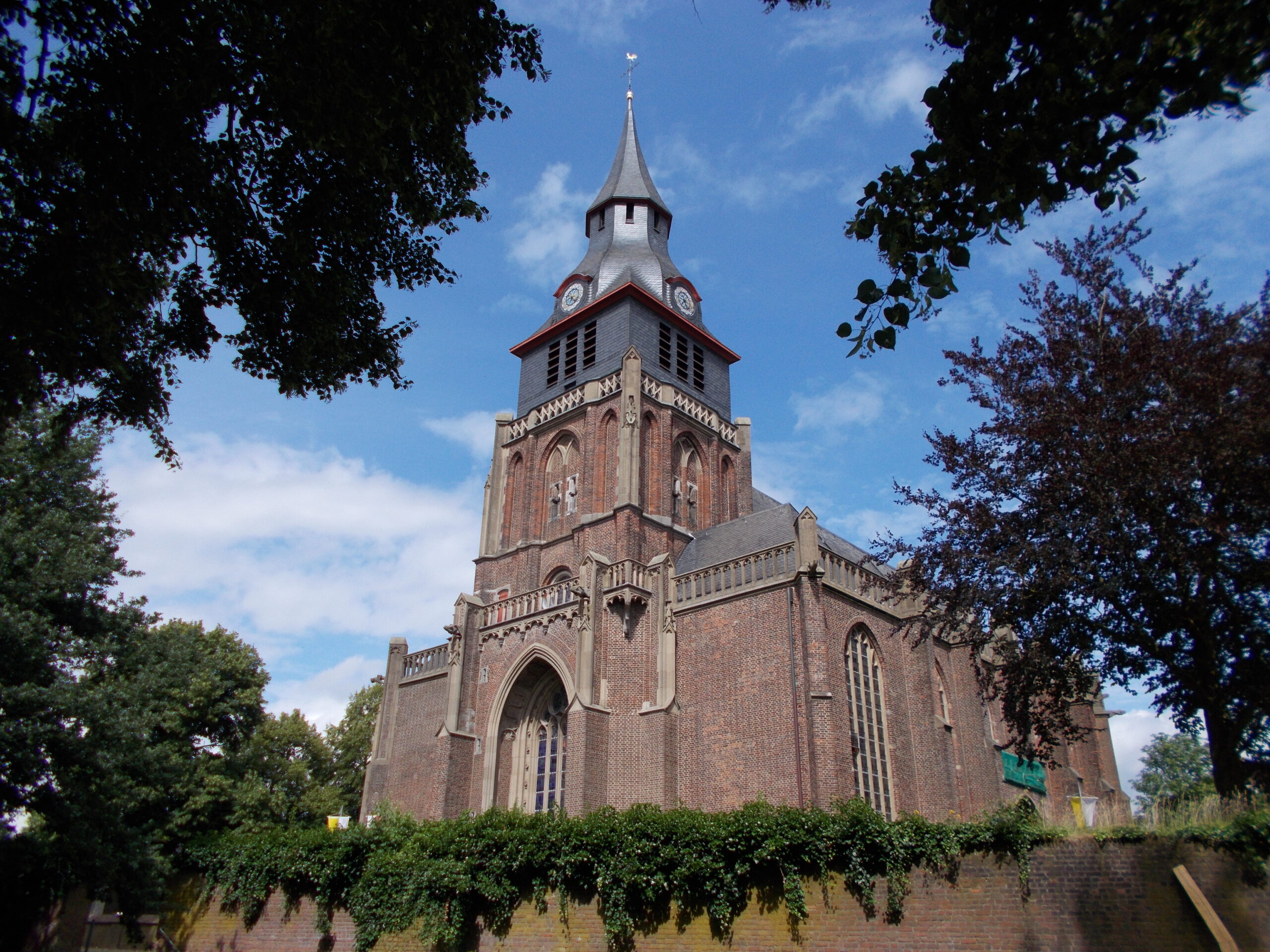
The pilgrimage of Kranenburg was born of a legend about a host cast in 1280 and a wooden crucifix found twenty-eight years later. Today the Wundertätiges Heiliges Kreuz is being venerated, not a preserved Eucharistic form.
A necessary classification
Kranenburg appears in some repertories under the title of the Eucharistic miracle of 1280. However, the parish itself explains that the present memory is a pilgrimage to the Holy Cross. The object guarded and shown to the faithful is a wooden crucifix.
The distinction avoids imagining an incorrupted host preserved since the 13th century. The Eucharist is part of the narrative origin; the cross found and devotion to Christ crucified and risen constitute the visible center of later worship.
The legend of the host of 1280
According to the parish legend, in 1280 a pastor could not or did not want to consume Easter communion. He threw the consecrated form in the hole of a tree next to the Reichswald.
When he repented and confessed to what happened, the parish priest tried to get the shit back, but he couldn't find it anymore. The parish expressly uses the term "legend" for this beginning and the fact sheet retains that attribution rather than presenting every detail as a contemporary act.
The tree and the crucifix
Twenty-eight years later, about 1308, the tree was cut to use as wood. Inside appeared a body of Christ carved in wood. The community immediately related the finding to the narrated Eucharistic desecration and brought the crucifix to the church to venerate it.
The discovered, according to local tradition, was therefore a crucifix and not the form of 1280. This accuracy changes the category of the case and allows us to understand why the pilgrimage is named after Pilgrimage, pilgrimage of the Cross.
The Miraculous Holy Cross
The crucifix is known as Miraculous Holy CrossThe Holy Cross. It is stored in a small, high structure, the Cross turrets, located on the school cruise.
The parish shows photographs of the object, the altar and the 2013 restoration. The veneration is not addressed to wood as if it had its own power, but to Jesus Christ, whose Passion, Death and Resurrection it represents.
The construction of the sanctuary
The offerings of pilgrims made it possible to start in 1406 the great late church of St. Peter and Paul. The current building attests to the importance acquired by devotion in the Lower Rhine region and in the neighbouring communities of the Netherlands.
Architecture, altarpieces, paintings and symbols invite us to stop the daily life and contemplate Christ. The sanctuary is a living liturgical community and not just a historical container of the crucifix.
The Exaltation of the Holy Cross
The main party is organized around the 14th of September, Exaltation of the Holy Cross. The crucifix is removed from the Cross turrets and stands before the altar for veneration.
At the outside celebration, on the Sunday after the feast when appropriate, the brothers of the Cross carry the crucifix in procession through the streets. At the end of the holiday week he returns to his place of custody.
An annual season of pilgrimage
The parish opens the season on the eve of the fourth Sunday of Lent with a pilgrimage on foot about eight kilometres from the church of San Martín de Zyfflich. Throughout the year there are hermandades, communities, ministers, elders and pilgrims from the border region.
The programming culminates in September with the procession of the Cross, a procession of lights and daily celebrations. A Mass of the Cross is also held on Friday, except on the first Friday of the month, according to the current parish information.
El Kreuzstock junto al Reichswald
Un monumento o Cross-stock remember on the edge of the forest the traditional place of the tree. It is a memorial point other than the sanctuary that keeps the crucifix.
The map of this document is placed in the collegiate of St. Peter and Paul because there is the venerated object, there is the pilgrimage and the building can be identified with precision. The point of the forest is not presented as a proven archaeological location of the host.
Qué kept it there no
The crucifix, the sanctuary, the pilgrimage and the parish memory are preserved. A host from 1280 is not preserved. Nor should the wooden body be described as a physical transformation of the consecrated form.
The tab welcomes tradition without altering its content. The connection between host, tree and crucifix belongs to the foundational legend; the existence of the present cult of the Cross is a verifiable pastoral reality.
Location and map
The collegiate and sanctuary of St. Peter and Paul is located in Kirchplatz 1, 47559 Kranenburg, North Rhine-Westphalia, Germany. The marker uses 51.7896782, 6.0060342.
Kranenburg appears only on the devotions map of Jesus. It remains outside the main layer of Eucharistic miracles so as not to communicate that there is a preserved Eucharistic relic.
Spiritual feeling
The narrative unites repentance, confession and reparation. His spiritual fruit is not to seek the unusual, but to regain the reverence towards Christ and to trust in mercy that transforms a recognized guilt.
Contemplating the Cross leads to Easter. The pilgrim is sent back to his life to reconcile, serve and carry with love the crosses of others.
Two places for one memory
The Kranenburg tradition relates the place where the host would have been thrown, along with the forest, with the collegiate in which the crucifix is kept. The main marker points out St. Peter and Paul because there the pilgrimage is developed and the preserved object is venerated.
The so-called Kreuzstock recalls the scope of the tree associated with the apparition of the cross. It should not be confused with an Eucharistic relicary or presented as an exact co-ordinate demonstrated by the gesture of 1280.
Why not appear on the Eucharistic map
The story begins with a host, but the current cult is directed to the Holy Cross found decades later. A transformed form is not preserved and there is no pilgrimage today focused on a Eucharistic relic. That's why the tab belongs to Devotions of Jesus.
The decision prevents a map of Eucharistic miracles from becoming a list of any story where a host is mentioned. The relationship is fully explained in the text, without erasing its origin or altering the present identity of the sanctuary.
Pilgrimage to the Cross
The spirituality of the place leads to contemplating the Passion and mercy of Christ. The crucifix does not act as a talisman and the tradition of the repentant man does not justify humiliating him or turning his lack into a spectacle.
The Christian pilgrimage transforms the memory of sin into a call to reconciliation. Anyone who visits Kranenburg can pray for those who carry guilt, ask for a heart capable of repairing and approaching the sacraments in the times offered by the parish.
Sources and limits of the account
The parish preserves the tradition of the Cross and explains its pilgrimage. The Eucharistic panel helps to know the antecedent of 1280, but it does not replace the voice of the community that preserves the crucifix or shows a material transformation between the host and the tree.
The fact sheet keeps both testimonies in relation and points out where their emphasis diverges. If new studies of the object or the parish file were to appear, they should be added as differentiated evidence, never as retrospective justification for every legendary detail.
Respect for conserved object
The crucifix has a material history of its own and is subject to parish custody. Its antiquity, restorations and form of exposure should be described by inventory or information of the sanctuary, not by conjectures that have just emerged from the legend.
He who contemplates him honors Christ represented on the cross; he does not worship wood or attribute to the object a separate effectiveness from God.
Sources consulted
- Parroquia de Kranenburg: historia del miraculous Holy Cross, main institutional source.
- Parish of Kranenburg: information for pilgrims, current calendar and cult.
- Exposure associated with San Carlo Acutis: Kranenburg, contrasted divulgive fuente.
Para orar
Lord Jesus, crucified and risen, give us a repented heart, reverence before your presence and strength to transform our life into mercy and service. Amen.
Image credit
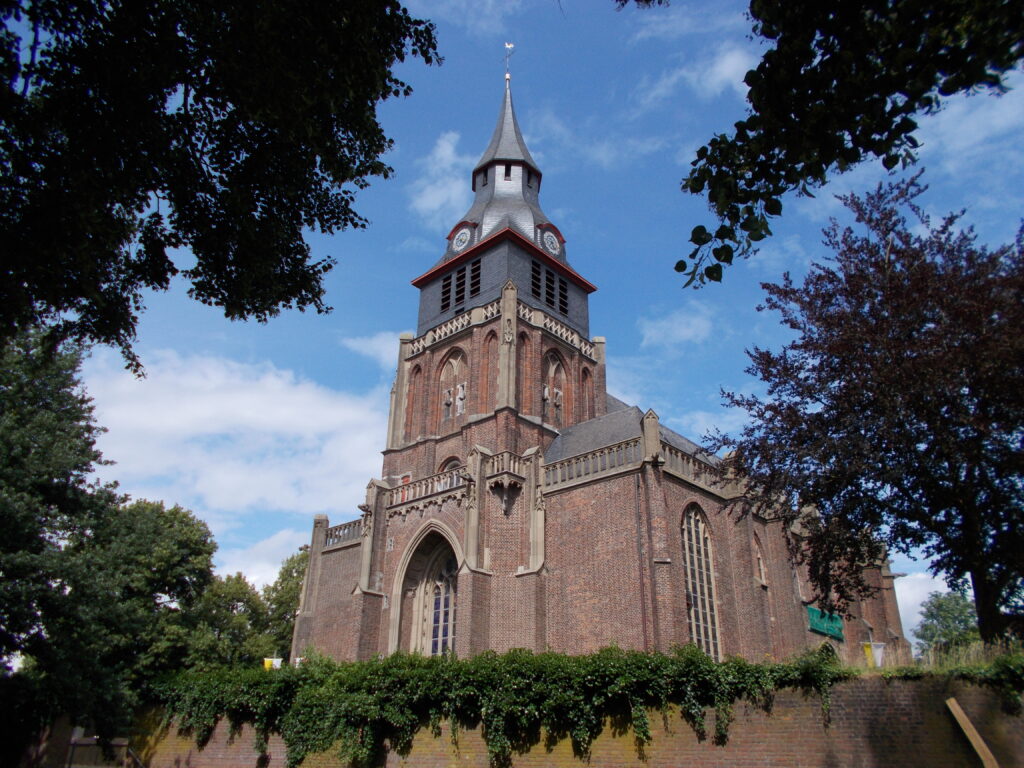
Collegiate and sanctuary of St. Peter and St. Paul of Kranenburg. Dat doris / Wikimedia Commons, CC BY-SA 4.0. File and license in Wikimedia Commons.
