
The solemnity of Corpus Christi was born in the diocese of Liège in 1246 by the impulse of Saint Juliana of Cornillon and Blessed Eva of San Martín. Urban IV extended it to the universal Church in 1264. It was not a Eucharistic miracle that occurred in 1374.
The correction of a date
The international repertoire associated with San Carlo Acutis rotates the case as "Liège, 1374." However, the Vatican sources and the shrine of Cornillon place the decisive facts more than a century before: the diocesan feast was born in 1246 and its universal institution arrived in 1264.
A Eucharistic miracle in Liège in 1374 is not documented in these sources. The tab retains the reference of the catalogue to facilitate its traceability, but corrects the chronology and classification.
Who was St. Juliana of Cornillon
Juliana was born about 1192 or 1193 in Retinne, near Liège. Orphan since she was a child, she was entrusted with her sister to the consecrated women who attended the leper and hospice of the Mont-Cornillon.
It was formed in that environment of prayer, care for the sick and community life. He later became a prime. His Eucharistic spirituality was not born apart from charity: Cornillon was a place where healthy and sick shared responsibility and service.
The leper of Cornillon
The hospice existed since the 12th century at the eastern gates of Liège and became one of the most important care institutions in the city. He received people affected by diseases then grouped under the name leprosy.
The community brought together brothers and sisters, sick and caregivers. The Gospel currency remembered by the sanctuary - "I was sick and you visited me" - helps to understand that devotion to the Body of Christ was linked to the care of its suffering members.
The vision of the incomplete moon
The Vita de Juliana, written shortly after her death, says that for years she saw a light moon crossed by a dark strip. The image was repeated in its moments of worship and at first it did not understand its meaning.
According to his biographer, he received the interpretation that the moon represented the life of the Church and the dark area indicated the absence of a feast dedicated in a particular way to the Body and Blood of Christ.
Spiritual vision and historical evidence
The vision belongs to the spiritual biography of a saint and not to a phenomenon that occurred with a host. The main source is Vita, close to people who had met Juliana, but written for the hagiographical purpose.
Documented history does not depend on physically demonstrating vision. Their influence on specific people, theological discernment, episcopal decision and subsequent liturgical legislation can be verified.
La beata Eva de San Martín
Juliana shared her wish with Eva, who was held next to the San Martín de Liège collegiate. Eva became a persistent collaborator and kept the project alive even when Juliana suffered opposition and had to leave Cornillon.
The party was not the result of an isolated initiative. He grew up through a network of women, theologians, canons and pastors. Recognising Eva avoids reducing history to one figure and shows the community dimension of discernment.
Theologians and ecclesial leaders
Juliana consulted trained people from Liège, including Dominicans and Jacques Pantaléon, then Archedian and later Urban Pope IV. The proposal was examined before it became a liturgical rule.
This process differs the case of a simple popular account. A personal mystical experience entered into dialogue with the theology and authority of the Church until a public celebration.
The institution in Liège in 1246
Robert of Thourotte, Bishop of Liège, instituted in 1246 a feast of the Most Holy Sacrament for his diocese. St. John Paul II recalled this fact in his letter for the 750 anniversary of the celebration.
The date of 1246 is the central liturgical milestone. The sanctuary explains that a later celebration, in 1252, took place in the collegiate of San Martín with the pontifical legacy Hugo de Saint-Cher.
The universal extension of 1264
Jacques Pantaléon became a pope under the name Urban IV. On August 11, 1264, he promulgated the Triiturus bull of hoc world and extended the solemnity of Corpus Christi to the universal Church.
Juliana had died in 1258 and did not see the process completed. Eva de San Martín received the news from the universal institution. The perseverance of both was thus forever linked to one of the great feasts of the Catholic calendar.
St. Thomas Aquinas and the trade
The liturgical tradition relates to St. Thomas Aquinas with the composition of the new solemnity. Hymns like Pange lingua, Tantum ergo and the Lauda Sion sequence have for centuries nurtured Eucharistic worship.
Music and texts are not secondary ornaments: they express the theology of the real presence, the memory of Easter and the praise of the Church. The party born in Liège thus acquired a universal language.
Corpus Christi and the Eucharist
Solemnity contemplates the sacrament of the Body and Blood of Christ and publicly prolonges the thanksgiving of the Mass. In many places it includes procession, worship and blessing with the Most Holy.
It does not replace the Paschal Triduum or create a different Eucharist. It allows to stop in a special way in the face of the sacramental gift of Christ and to renew the faith, reverence and charity that spring from communion.
The present sanctuary
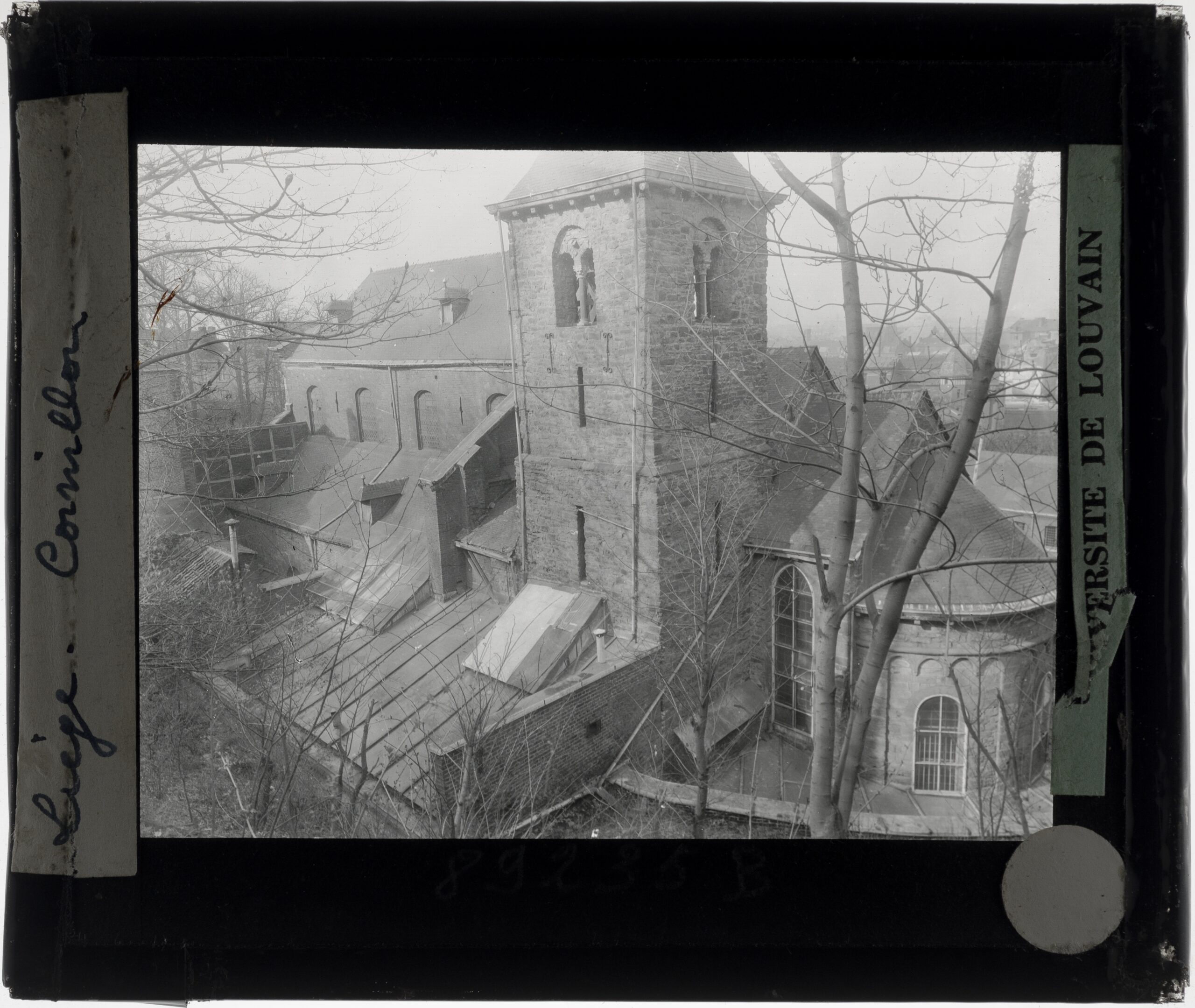
The shrine of Santa Juliana occupies the old place of Cornillon, on the rue de Robermont. It retains a medieval chapel, monastic spaces, a host and a small contemporary beguinage.
After the presence of the Carmelites between 1860 and 2017, a community of clarisas assumed monastic life. The sanctuary continues dedicated to the prayer, worship, welcome and memory of Juliana.
A monastic harlot factory
The clarisas make harnesses for many communities. This task concretely unites the daily work of the monastery with the Eucharistic spirituality that marked Cornillon since the 13th century.
Production does not turn the place into an ordinary commercial factory. It is part of contemplative life and liturgical service, along with Mass, prayer and the reception of pilgrims.
Charity and worship
The hospital origin of the sanctuary recalls that the sacramental body of Christ cannot be separated from his suffering body in the poor and sick. Juliana learned to worship in a place intended for care.
A Corpus Christi celebration that did not lead to service would be incomplete. The procession leads Christ through the streets so that faith may be made a presence of mercy, justice and fraternity.
Why it's off the miracle map
Liège deserves a prominent place in world Eucharistic history, but not by a marker that affirms a miracle of 1374. Its importance is liturgical, spiritual and pastoral, and it is better documented than that wrong label.
The tab appears on the devotions map of Jesus and in the related milestones section. It does not increase the Eucharistic miracle counter or mix with cases that describe material phenomena.
exact location
The sanctuary is located in rue de Robermont 2, 4020 Liège, Belgium. The coordinates 50,6350839, 5,5924992 point to the monastic enclosure and the chapel of Cornillon.
The marker corresponds to Juliana's place of life, prayer and vision. The diocesan institution and the historical celebrations also involved other temples of Liège, especially the collegiate of San Martín.
How to visit and celebrate
The sanctuary maintains monastic life, celebrations and welcoming activities. Timelines may change; official information should be consulted before travelling and the silence and spaces reserved for the community should be respected.
The best way to honor this story is to participate reverently in the Eucharist, to devote time to worship and to unite prayer to a concrete work of mercy.
Responsible classification
The category "milestone of devotion and Eucharistic liturgy" accurately describes the case. It recognizes Juliana's vision according to her Vita, the Episcopal decision of 1246 and the universal bull of 1264.
Correcting 1374 does not reduce the importance of Liège. On the contrary, an imprecise label is replaced by a historical contribution of universal and well documented scope.
Sources consulted
- St. John Paul II: Letter for the 75th anniversary of Corpus Christi, institution in 1246 and universal extension.
- Benedict XVI: audience on Saint Juliana, biography, vision and discernment.
- Sanctuary of Santa Juliana de Cornillon, history of the place, community and direction.
- Sanctuary: origin of the feast of Corpus Christi1246, 1252 and 1264.
- Sanctuary: Saint Juliana del Mont-Cornillon, Vita, vision and collaborators.
- Repertoire associated with San Carlo Acutis: Liège, initial reference reclassified and corrected.
Para orar
Lord Jesus, living bread and faithful presence, we thank you for Saint Juliana and for those who made the feast of your Body and Blood flourish. Make our worship a source of communion and service. Amen.
Image credit
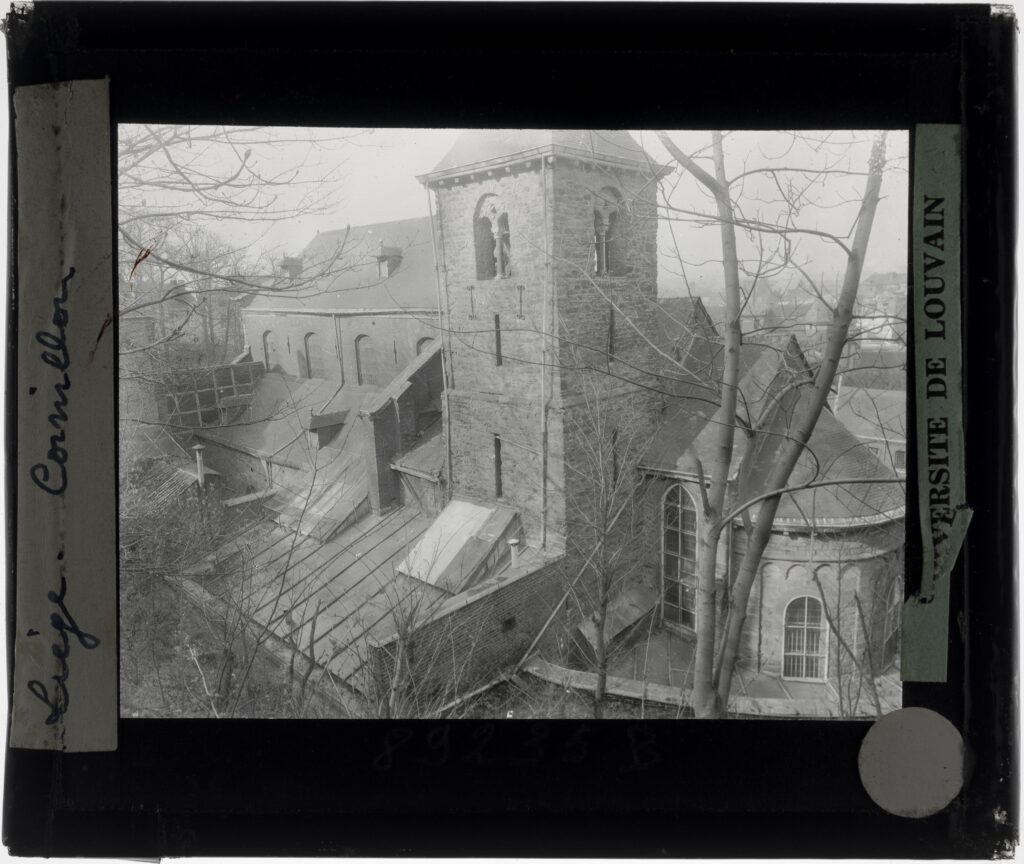
Historical view of the convent of Cornillon, the present shrine of Santa Juliana in Liège. Unknown author / KU Leuven / Wikimedia Commons, public domain. Archive and public domain status in Wikimedia Commons.
