
The tradition of 1317 begins in a house of Viversel, continues for centuries in the Abbey of Herkenrode and since 1804 has been held in the cathedral of San Quentin de Hasselt. The relic and its annual commemoration remain in force.
Three places for one tradition
The name "Herkenrose" identifies the abbey that for centuries guarded the host linked to the story. However, the initial episode is located in Viversel, now part of Lummen, and the current custody is in the Cathedral of San Quentin de Hasselt.
A single marker cannot simultaneously represent origin, historical custody and present location. This fact sheet places the main point in Hasselt because there the relic is preserved and exposed today, and explains the other two places in the text.
Viversel, 25 July 1317
Tradition places the beginning on July 25, 1317. A patient from Viversel asked to receive the viatic, the communion brought to those in danger of death, and a chaplain came in a consecrated form.
The story states that the priest left the container momentarily while preparing the sick by confession. During this interval a person in the house touched the form without liturgical authorization and it began to show blood.
How the story is transmitted
The Hasselt Brotherhood reproduces a translation of "Four Stories of the Holy Sacrament of the Miracle," a work published in 1620 by the Augustino Matthias Pauli. This text is an important historical source to know how the case was counted three centuries later.
It is not a written statement in 1317 or a modern medical report. The temporal distance must be visible: it documents an already consolidated tradition, its spiritual motives and the veneration of Herkenrode, but it does not allow to verify every detail as a contemporary witness.
The transfer to Herkenrode
According to the narrative, the chaplain consulted the parish priest of Viversel and was advised to take the form to the priest Simon, confessor of the religious of the Abbey of Herkenrode. The path between the two places became part of the story.
The 1620 version adds extraordinary signs, such as kneeling animals and bells that sounded when they arrived. These scenes are presented as devotional elements transmitted, not as independent observations verified.
The abbey as historical custody
Herkenrose was a major female Cistercian abbey. The relic found there a liturgical, community and artistic framework that allowed to sustain the veneration for centuries and to relate it to the religious identity of the region.
The term "Holy Blood of Herkenrod" comes from that long custody. It does not mean that the initial episode occurred inside the abbey. Geographical accuracy avoids converting the reception place into the place of origin.
The printed work of 1620
Matthias Pauli dedicated her work to Abbess Anna Blockerije. The text brings together the story of Viversel- Herkenrode with other Eucharistic cases and responds to the confessional concerns of its time.
Its purpose was to strengthen Catholic devotion and respond to post-Reformation religious disputes. It therefore blends narration, exhortation, healing attributed to relic and catechetic arguments. Reading it critically does not mean despising it: it allows you to understand what kind of source it is.
Assigned cures and visions
The work gathers pilgrimages, cures and visions related to the host. Some people would have seen different figures looking at the relic; others would have recovered health after going to Herkenrode.
These news are part of devotional history. The file does not present them as medical diagnoses or scientific records. Its main value is to show the intensity and extent of the cult.
The French Revolution and the Change of Custody
The political transformations of the late 18th century led to the suppression and dispersion of many religious communities. The abbey of Herkenrose ceased to be the stable center that had protected the relic.
The fellowship reports that since 1804 the Sacrament of the Miracle is preserved in the cathedral of San Quentin de Hasselt. This date clearly sets contemporary custody and justifies the new location of the map.
La catedral de San Quintín
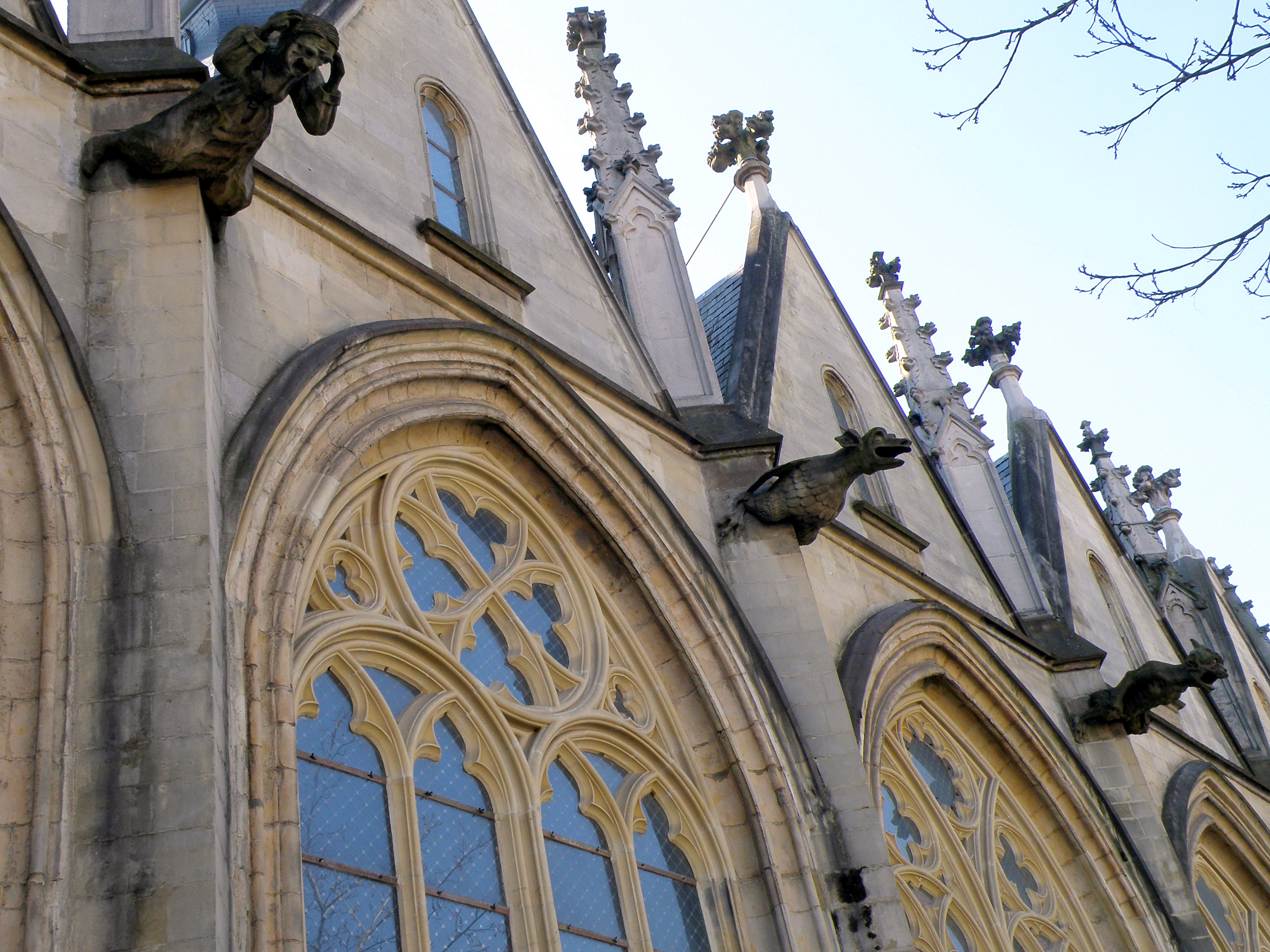
The cathedral is located in the heart of Hasselt, next to Vismarkt. It is the place where the person who wishes to know the present devotion should be directed, although the exhibition of the relic depends on the liturgical calendar.
The building should not be confused with the Virga Jesse Basilica. The latter participates in worship celebrations and retains an altar from Herkenrode, but the official source places the custody of the relic in San Quentin.
The annual exhibition of 25 July
The fellowship indicates that every July 25 the Sacrament of the Miracle is exposed and commemorated by worship. Jubilee celebrations may include solemn Mass, conferences and long periods of prayer.
The anniversary programmes, such as the 2022, should not become perpetual hours. Before travelling, you should consult the parish or the fellowship to confirm access, celebration and conditions of visit.
The Brotherhood of the Most Holy Sacrament
In Hasselt a sacramental fellowship was founded in 1713. After the transfer of 1804 he assumed a central role in the commemoration of the case of Viversel and in the promotion of Eucharistic worship.
The continuity of the brotherhood is a solid evidence of current historical veneration. His testimony is pastoral and devotional; he must not be presented as a laboratory or as a scientific commission.
Old custody and artistic heritage
Devotion produced artistic objects linked to Herkenrode. The fellowship mentions an old custody of the abbey currently preserved in the museum of the city of Hasselt and used in a commemorative photographic creation.
It is appropriate to distinguish this historical custody, the host-relic of the cathedral and the altar of Herkenrode transferred to Virga Jesse. They're related goods, but they're not all in the same building.
Qué se venera actualmente
The official source states that the host linked to 1317 is preserved in San Quentin. This material continuity differentiates the case from other medieval traditions whose forms disappeared or whose cult ended.
The fact sheet does not claim that a modern biochemical analysis of the visible substance has been published. Current veneration and ecclesial custody are historical and pastoral events; the material nature of the stain requires another kind of test.
The expression "unconsecrated hands"
The ancient narrative interprets the contact of an unauthorized person as irreverence. It must be read in the Eucharistic practices of the time and not used today to despise the lay faithful.
Liturgical discipline regulates who distributes communion and how the Most Holy is treated, but baptismal dignity does not depend on belonging to the clergy. Spiritual teaching is reverence, not a despective division between people.
The Eucharist is the center
The brotherhood itself stresses that the greatest mystery is not the apparition of blood, but the surrender of Christ in every Eucharist. The extraordinary sign can only be understood as an invitation to deepen that sacramental presence.
Devotion finds its criterion in mass, worship, reconciliation and charity. If it is reduced to curiosity about an object or to the search for sensations, it loses the Christian horizon that gives it meaning.
Accurate location of current custody
The Cathedral of San Quentin is in Vismarkt 13, 3500 Hasselt, province of Limburg, Belgium. The coordinates 50,9298773, 5,3388298, correspond to the cartographed religious building.
The Abbey of Herkenrode remains an essential historical place and Viversel as the origin of the story. Both are explained and linked in the investigation, but the main marker points to where the relic is held today.
Correction of the above image
The page had mistakenly received a photograph of the Basilica of San Domenico Maggiore in Naples. That file did not illustrate Herkenrode, Viversel or Hasselt and could induce a false geographical identification.
The outstanding image is replaced by a free photograph of the Cathedral of San Quentin. The previous file is not deleted from the library, but it stops representing this tab.
Responsible classification
The document maintains the category "Eucharistic miracle with existing historical ecclesial veneration" because there is a guarded relic, annual commemoration and active fellowship. The description, however, incorporates the late character of the preserved narrative source.
This formulation allows respect for the ecclesial tradition without turning veneration into scientific certification. It also prevents the map from confusing the historical abbey with the current custody.
Sources consulted
- Confraternity of the Most Holy Sacrament of Hasselt, origin in Viversel, custody since 1804 and annual exposure.
- History of the 705-year Jubilee, translation of the 1620 Matthias Pauli text.
- Questions and answers from the Brotherhood, Eucharistic sense and brotherhood of 1713.
- Hasselt's heritage and artistic project, old custody, altar and devotion.
- Flamenco Heritage Inventory: Herkenrode Abbey, context of the historical place.
- Repertoire associated with San Carlo Acutis: Herkenrode, contrasted initial index.
Para orar
Lord Jesus, who gives you in the Eucharist, increases our faith and our reverence. Have the memory of Viversel, Herkenrode and Hasselt lead us to worship you, reconcile us and serve with love. Amen.
Image credit
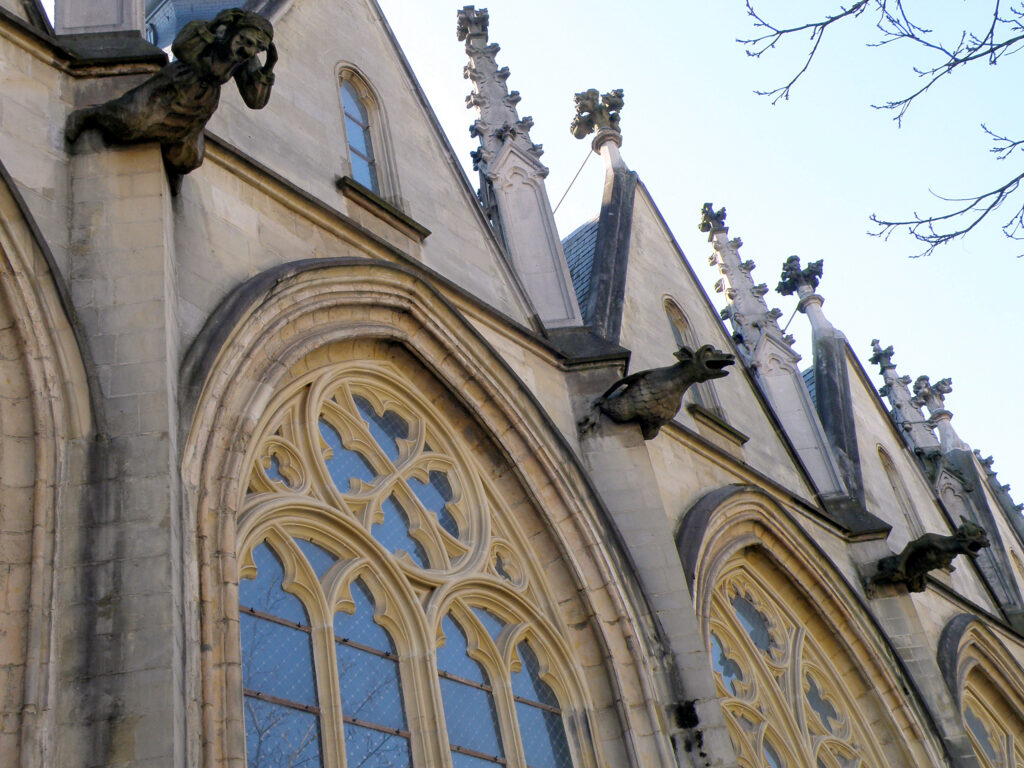
Catedral de San Quintín de Hasselt, donde se custodia la reliquia desde 1804. Torsade de Pointes / Wikimedia Commons, CC0. Archive and dedication to public domain in Wikimedia Commons.
