
In 1597 the Jesuit Juan Juárez received twenty-four consecrated forms recovered after several sacrilegious robberies. They remained without significant corruption and, after ecclesiastical and university studies, their public veneration was authorized in 1619. The forms disappeared in 1936; his chapel and the diocesan feast remain.
What were the Holy Forms of Alcalá
The Holy Forms were twenty-four consecrated hosts guarded for more than three centuries by the Jesuit community and the Church of Alcalá de Henares. Its prolonged conservation gave rise to research, public veneration, processions and a chapel of its own.
They disappeared at the beginning of the Civil War. Devotion subsists as a Eucharistic memory and as a call to worship, not as an exhibition of a present relic.
The delivery of 1597
At the end of the 16th century a repented man gave to the Jesuit father Juan Juárez twenty-four consecrated forms. According to the pastoral letter of the diocese of Alcalá, they had been stolen along with a group of Moors in various temples. The episode must be narrated without turning a historical criminal attribution into a trial of an entire religious or ethnic community.
Juárez feared that the forms had been poisoned, a practice mentioned by the tradition of the time, and prevented them from being consumed. He kept them in conditions that allowed them to wait for their natural decomposition.
The waiting and the first checks
The years passed without the expected corruption. The local Church did not immediately open the cult: it observed the phenomenon and promoted studies involving ecclesiastical authorities and doctors from the University of Alcalá.
This delay is an essential part of history. Public veneration was born not only of popular enthusiasm, but after a process of examination of the knowledge available in the 16th and 17th centuries.
The recognition of 1619
In 1619 the local Church recognized the fact as prodigious and allowed public veneration in the twenty-four forms. The diocese recalled in 2018 that 2019 would be the fourth centenary of that decision and linked memory to a renewal of Eucharistic celebration and veneration.
The tab uses "recognized" in this historical and local sense. It does not claim that there is a modern scientific decree, nor does it automatically transfer old methods to current criteria.
The Jesuit church and the transfer
The forms were linked to the High College of the Society of Jesus. In 1620 they were solemnly transferred to the new Jesuit church, today the parish of Santa Maria la Mayor. The relationship with the Jesuits explains both their initial custody and the construction of a worthy space to venerate them.
The Libreros Street building has a monumental façade and a university history closely linked to the city.
The Chapel of Holy Forms
The annexed chapel was built during the 17th century to guard the relic and receive the faithful. His dome and drum were decorated in 1699 by Juan Vicente Ribera through architectural perspectives, angels and allegories that led visually to the Eucharist.
Architecture remains the most accurate material testimony of the missing cult. Its preservation allows to explain devotion without artificial reconstructions.
Processions and life of the city
The Holy Forms became one of Alcala's great religious signs. There were celebrations, processions and an overgold silver custody. The University, the city and the ecclesiastical institutions participated at different times in their history.
Devotion was not confined to material curiosity. He fed preaching, art, music and an understanding of Alcalá as a Eucharistic city.
The expulsion of Jesuits
The political changes that affected the Society of Jesus altered institutional custody, but did not extinguish the cult. The forms passed through different responsible and safe places, maintaining their link with Alcalá and the temple where the chapel had been erected.
This historical continuity does not imply that all transfers are documented in the same detail. It is appropriate to distinguish the large established milestones from the details transmitted by later chronicles.
The disappearance in 1936
At the beginning of the Civil War, the twenty-four forms and custody that contained them disappeared. There is no proven location today, and it should not be said that they are kept hidden or that they were recovered without documentary evidence.
Loss changes the nature of the place. The chapel is no longer a relic of the forms of 1597, but a memory of a historical veneration and space dedicated to the ordinary Eucharistic presence.
The present party and worship
The diocese of Alcalá holds the feast of the Holy Forms on the sixth Sunday of Easter. His recent bulletins document Mass and Eucharistic Procession, and the 2025 pastoral letter again narrates the event to invite a life shaped by the Eucharist.
The perpetual worship of the chapel spiritually prolonges that memory. What is adored is the Most Holy Sacrament currently consecrated and exposed, not the missing forms of 1597.
Qué permanece y que no
The chapel, its decoration, historical documentation, the party and a community of worshippers remain. The 24 forms and their historical custody do not remain. This difference must appear before the visitor organizes a pilgrimage.
The absence of relic does not make the case irrelevant. It allows us to understand how the Church examined, received and celebrated a phenomenon for centuries and how a community transforms a loss into living worship.
exact location
The marker points to the Chapel of the Holy Forms, annexed to Santa María la Mayor, with access from the homonymous alley and the church of Libreros Street. The coordinates 40,4846781, -3,3623655 identify the memorial building.
The photograph was taken from 40,484820, -3,362792 and shows the exact door. The map uses the center of the building, not the photographer's point of view.
Restoration and reading of the heritage
The chapel has required work of analysis, structural consolidation and artistic restoration. Taking care of his paintings is not intended to replace lost forms, but to preserve the space that explains how a city expressed its Eucharistic faith for generations.
The visitor can contemplate architecture, painting and religious memory. It must avoid interpreting each figure as direct proof of the event: the artistic program was created decades later and belongs to the history of its reception.
World map classification
Alcalá is incorporated as "a recognized Eucharistic miracle with missing relic." The label avoids two errors: to present history as if it had never received ecclesial veneration and to promise a relic that was no longer available in 1936.
Spiritual feeling
The memory of the Holy Forms leads to the Eucharist celebrated today. The extraordinary preservation belongs to the past; the presence of Christ and the call to surrender are received in every mass.
The chapel invites to repair desecration without hatred, to worship with humility and to turn communion into service. Remembering the loss of 1936 can also be a prayer for reconciliation and for faith to never be used as a weapon against others.
Sources consulted
- Diocese of Alcalá: pastoral programming 2018-2019 and fourth centenary.
- Diocese of Alcalá: pastoral letter "Molded by the Eucharist" (2025).
- Tourism of Alcalá: Santa María la Mayor and Chapel of the Holy Forms.
- Exhibition associated with San Carlo Acutis: Alcalá, contrasted with diocesan sources.
Para orar
Jesus the Eucharist, stay with us. Sana the wounds of our history, make us worshippers in spirit and truth and transform our communion into peace, justice and service. Amen.
Image credit
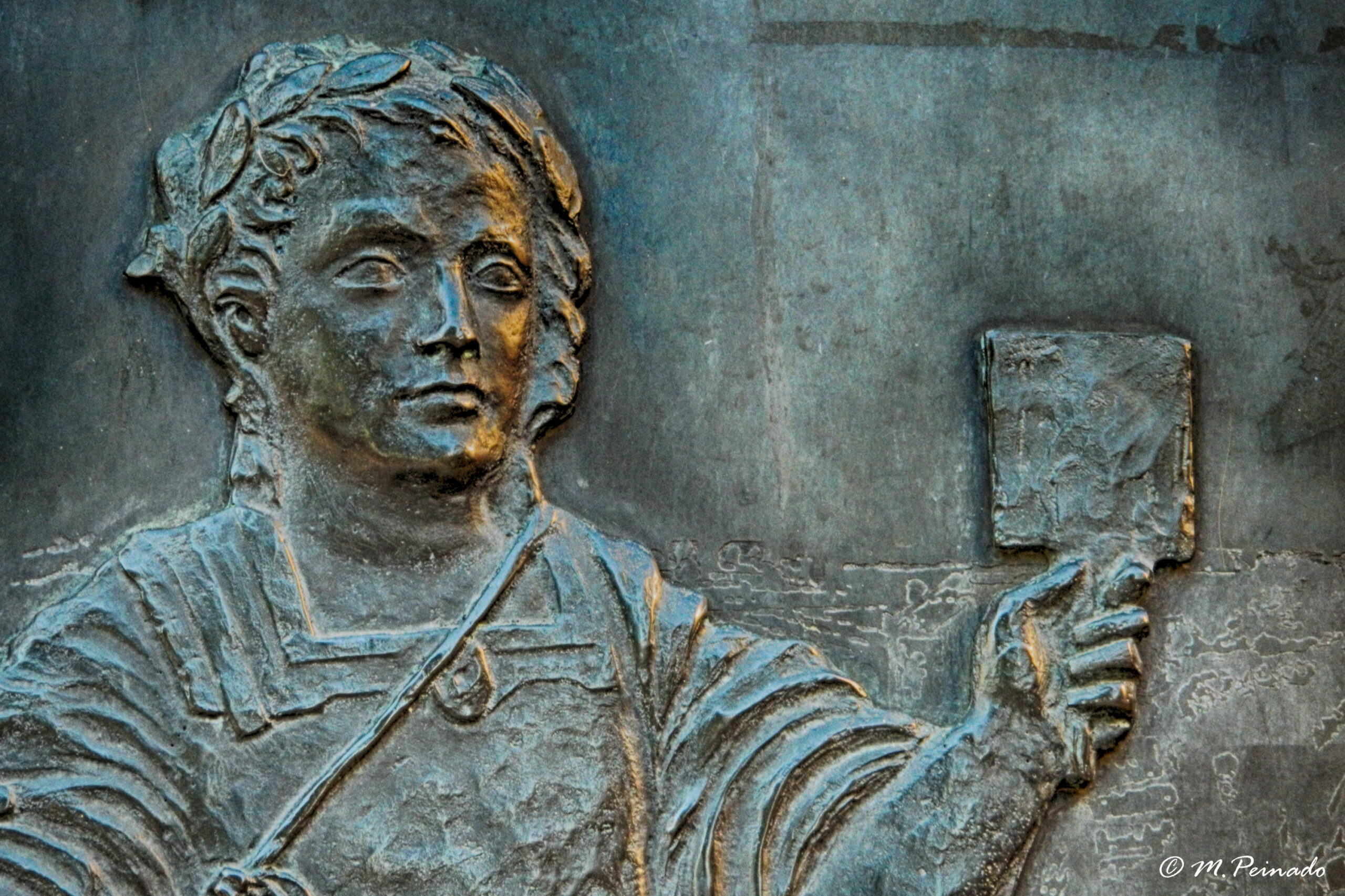
Entrance of the Chapel of the Holy Forms of Alcalá de Henares. M. Peinado / Wikimedia Commons, CC BY 2.0. File and license in Wikimedia Commons.
