
Bettbrunn retains one of the oldest documented Eucharistic pilgrimages in Bavaria. Its founding tradition, located around 1125, speaks of a host hidden in a cayado; the form was lost in a fire, while the Saviour carved on wood and pilgrimage continue.
The tradition of the shepherd of 1125
The foundational narrative places in 1125 a shepherd named Wunnibald. He wanted to carry the Eucharist with him while he was looking after the cattle and, according to the version transmitted, he received communion without consuming the form: he hid it at the top of his staff to venerate it during the day.
The story states that one day the fall fell to the ground and the host was left on the earth. The pastor tried to get her back, but he couldn't. He warned the priest and then went Bishop Hartwig of Ratisbona, who would have managed to raise her after promising the construction of a church dedicated to the Saviour.
Honest return and undue gesture
The story presents the shepherd as a pious person, but the action to draw a consecrated form from the celebration is not a model that can be imitated. Communion is received and consumed in accordance with the discipline of the Church; it is not kept privately or used as an amulet.
Tradition can be read as a catechesis on reverence and on the need to unite personal devotion to ecclesial life. The desire to have close to the Lord does not justify separating the Eucharist from the Mass, from the Ministry and from the Community.
The origin of the name Bettbrunn
The place was known for centuries for its connection to the event and to the source or well associated with history. The name Bettbrunn evokes this devotional landscape. The pilgrimage transformed an enclave of the Kösching forest into a religious destination of regional reach.
The diocese of Ratisbona presents it as the most ancient pilgrimage of hosts attested in Bavaria. This statement refers to the antiquity and continuity of the documented cult, not to a modern dating of the missing form.
El Salvador carved in the cayado
According to tradition, the central part of the cayside that had contained the form was used to carve an image of Christ the Savior. The devotion was thus focused on the Salvator MundiChrist who blesses and sustains the world.
The image survived events that destroyed other elements of the sanctuary and continues to be linked to its identity. It should not be confused with the host of the story: it is a devotional size made with the wood that tradition relates to the shepherd.
The host is no longer preserved
A medieval fire destroyed the temple and the venerated form ceased to exist. The church was rebuilt and history continued through the image of the Saviour, architecture and pilgrimages.
This loss determines the classification of the tab. Bettbrunn is a living Eucharistic place for its history and liturgical life, but it does not offer the visitor a miraculous host guarded. The page avoids suggesting a relic that is not present.
Reconstruction and growth of the sanctuary
After the fire, the work school of the Cathedral of Ratisbona raised a church from a ship that was completed around 1339. In 1374 he was raised to parish. The flow of pilgrims made successive enlargements necessary.
The Baroque configuration that dominates the building today reflects new construction and beautification campaigns. The sanctuary is not a stage reconstruction of the 12th century, but the result of centuries of veneration, fires, reforms and community care.
The avocados and the books of miracles
During one stage, the hermit agstines took the attention of the pilgrims. Between 1704 and 1768 about thirteen thousand favors and answers to prayer attributed to the intercession received in the place were recorded in five books.
These books are valuable testimonies of popular religiosity and believing experience. Its number shows the intensity of the cult, but it does not amount to thirteen thousand canonical statements of miracle. Each account belongs to a gender and to a time to be interpreted with historical criteria.
A pilgrimage appreciated by many generations
The Bavarian nobility and numerous parishes went to Bettbrunn. Historical sources describe pilgrimages from cities, markets and villages, and the church had to be extended to receive the faithful.
The perseverance of these routes created links between communities. Walking together, celebrating penance and participating in the Eucharist were more important than curiosity about a missing object. This Community dimension explains the continuity of the place.
The pilgrimage is still alive
The diocese of Ratisbona reports that dozens of parish groups and pilgrims arrive each year. Among the main moments are the begging, on Pentecost Monday, on Trinity Sunday and the pilgrimage of men on the second Sunday of October.
Calendars may change, so it is necessary to always consult the parish or the diocese before travelling. The current existence of celebrations and groups confirms that Bettbrunn is not just a museum of the past.
Accurate location and visit
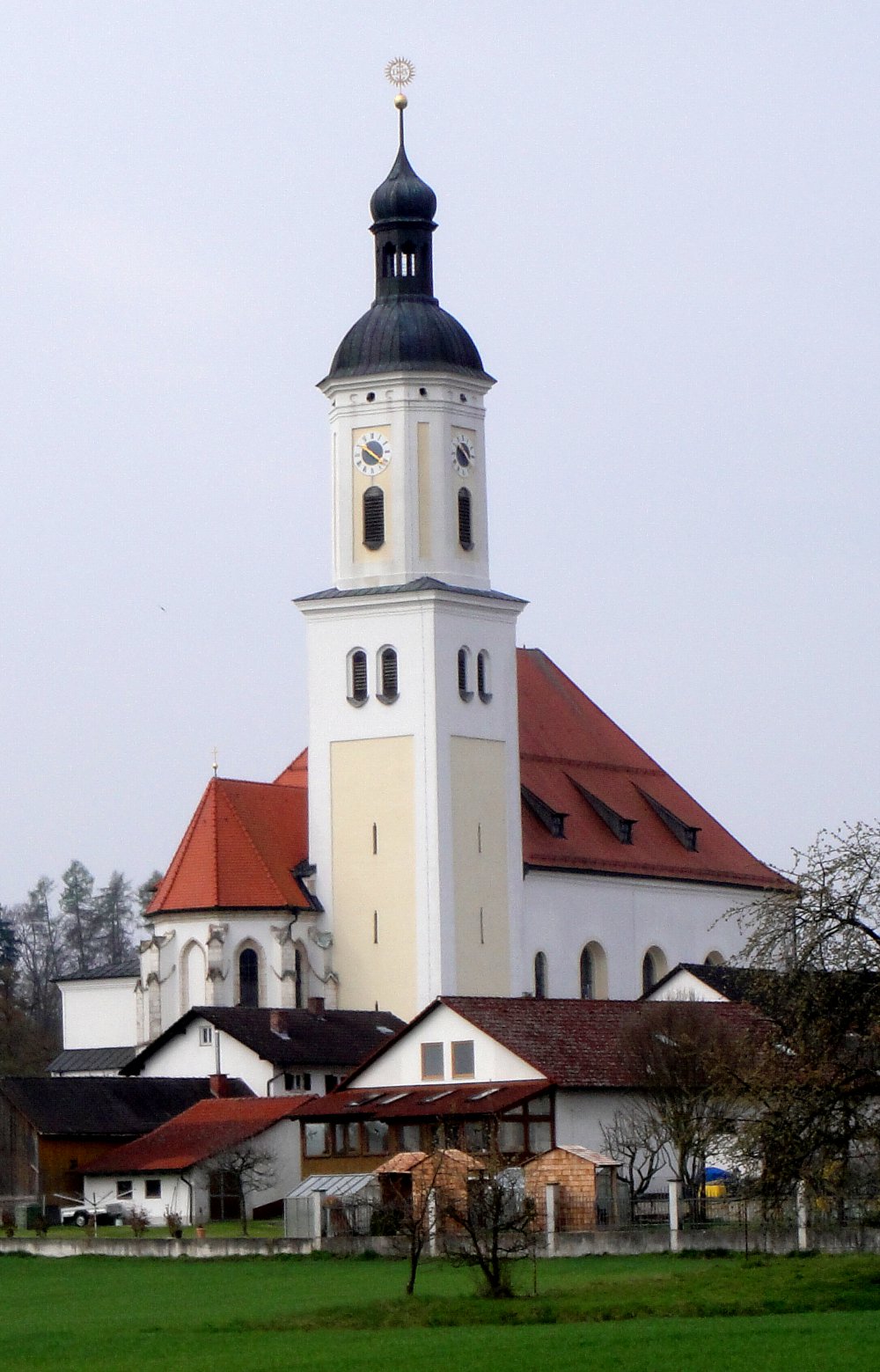
The parish and pilgrimage church of San Salvador is located in Salvator-Ring 5, Bettbrunn, an integrated town in Kösching, Bavaria. The marker is corrected to 48,8729257, 11,5557573, coordinate the building itself in open mapping.
The chosen photograph shows the sanctuary from the north-east and replaces a generic image of the Redeemer Christ of Rio de Janeiro. Anyone who visits the place must respect the liturgical times and remember that it is a parish in use.
World map classification
Bettbrunn appears as "Eucharistic tradition with current ecclesial pilgrimage and lost relic." The category brings together the two verifiable dimensions: the long history of the cult and its pastoral continuity, together with the absence of the form associated with 1125.
The marker does not scientifically certify the prodigy or turn traditional chronology into an archaeological conclusion. It points to a royal sanctuary whose community maintains a recognizable Eucharistic memory.
Spiritual feeling
History teaches that the closeness to Christ is not achieved by appropriating the Eucharist. Jesus gives himself up as a gift received in communion with the Church. Authentic worship leads to obeying, serving and living reconciled.
The Saviour carved in wood recalls that Christ blesses the world and comes to meet him who seeks it. The pilgrimage offers a path of conversion: walking, listening to the Word, celebrating the sacraments and coming home ready to love better.
A great pilgrimage that changed center
The origin of Bettbrunn is linked to a consecrated form, but the fire that destroyed it moved the visible center of devotion to the image of the carved Saviour, according to tradition, in the cayado. The pilgrimage remained Eucharistic for its history, its liturgy and its call to conversion, although it no longer guarded the foundational host.
This change helps to understand how a community can keep a memory without pretending to possess the lost object. Continuity does not depend on replacing it with a copy, but on honestly transmitting the story and celebrating the present faith.
The historical scale of reception
The records of cities, markets and pilgrim villages show that Bettbrunn was not a private devotion. Walking, hospitality, preaching and confession had to be organized for numerous groups. The enlargements of the temple respond to that social and pastoral reality.
The books of favors attributed to the sanctuary belong to the same culture. In addition to narrating cures, they reveal fears, diseases, travel and hopes of specific people. They are a source of the history of faith and daily life.
Preparar una visita actual
Whoever arrives in Bettbrunn will find a parish and a temple in use, not a museum recreation of the year 1125. It is appropriate to check celebrations and welcome, to keep quiet during the trades and not to look for a place of exposure in the lost way.
The full sense of the pilgrimage is to listen, celebrate and become transformed. The outer path can become an inner examination: how we receive communion, what reconciliations we postpone and who we can serve upon our return.
The antiquity as data and as tradition
To call Bettbrunn the most ancient and documented pilgrimage of Bavaria reflects the presentation of the diocese. It does not mean that every detail of 1125 comes from a contemporary writing or that there were no other less documented devotions before.
The precise formula retains historical value without turning a regional primacy into spiritual competition. The pilgrimages are no more true because they are older; they are also judged by the fruit of faith, communion and charity they raise.
Sources consulted
- Diocese of Ratisburg: the pilgrimage of the host of Bettbrunn, history and current continuity.
- House of Bavarian History: antiguo convento y santuario de Bettbrunn, institutional chronology.
- Diócesis de Ratisbona: Bettbrunn en el bosque de Kösching, pastoral context.
- Exposure associated with San Carlo Acutis: Bettbrunn, contrasted with diocesan sources.
Para orar
Jesus, the Savior of the world, teach us to receive you with faith and obedience. May our worship be born from the Eucharist celebrated by your Church and become service, reconciliation and love to those who walk with us. Amen.
Image credit
Parish and pilgrimage church of San Salvador of Bettbrunn. Papermond / Wikimedia Commons, CC0. CC0 file and declaration in Wikimedia Commons.
