
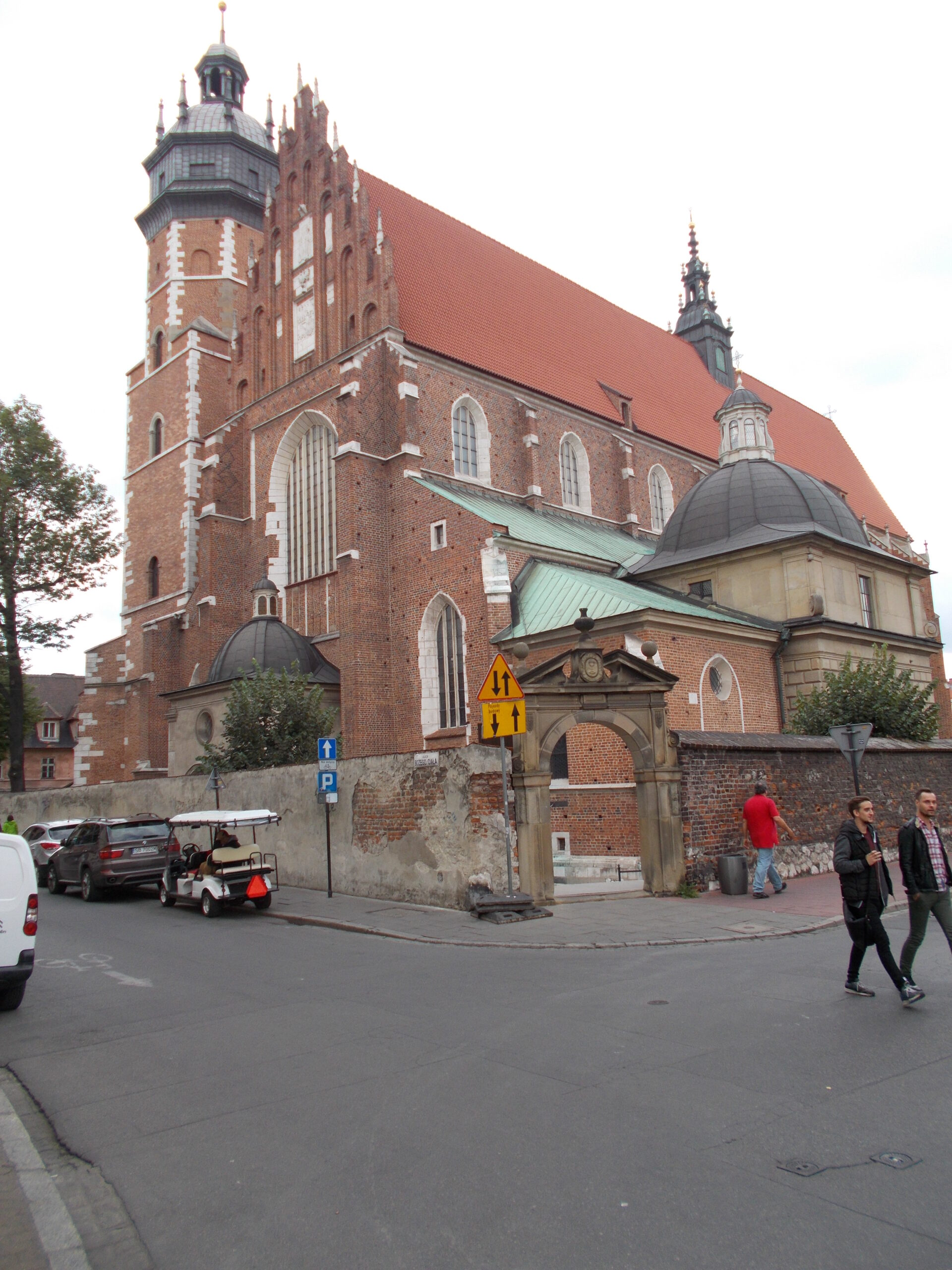
The basilica of the Corpus Christi de Kazimierz retains an ancient tradition about a stolen custody found in a wetland. The medieval Eucharistic cult is documented, but the parish itself presents the extraordinary episode as a legend transmitted orally and developed later.
Kazimierz and the Basilica of Corpus Christi
King Casimiro III the Great founded in 1335 the city of Kazimierz, now integrated in Krakow. The parish church of Corpus Christi was raised as a great Gothic construction and, since 1405, was entrusted to the Regular Canons of Letran. The temple retains centuries of liturgy, art, community life and Eucharistic devotion.
The historical pages of the parish itself offer non-identical chronological formulations: one places the beginning before 1341 and another speaks 1347. Both place the work in the 1340s. This data makes it impossible to explain the entire foundation as a safe consequence of a conventionally dated event in 1345.
El relato tradicional del hallazgo
The legend tells us that thieves took custody of the Most Holy Sacrament from a Franciscan church. When they found that the object was not gold, they threw it into a swamp area called Mathe. An extraordinary light would have revealed the place and allowed to recover custody or forms.
Subsequent versions attribute to the king the decision to build the church precisely as a repair and memory of the finding. The repertoire associated with San Carlo Acutis fixed the episode in 1345. The parish, however, calls this explanation a legend and warns that it was transmitted from generation to generation, probably extended in preaching.
An oral tradition with a foundational function
The story linked three prestigious realities: the origin of Kazimierz, the will of the monarch and the Eucharistic dedication of the parish. The parish history recognizes that this union had a great value of religious propaganda and was giving the temple the character of a sanctuary.
That a narrative has for centuries shaped the identity of a community is a relevant cultural fact. It does not, however, show that every detail occurred as later. The tab retains memory without transforming foundational symbolism into a contemporary chronicle.
Jan Dłurciz and the temporary distance
The tradition was collected by the chronist Jan DłYugoslav in the 15th century, several decades after the attributed facts. His testimony is important to know what was then believed and preached, but it does not amount to a 1345 act.
The parish research itself examines the story together with founding documents, bulls and architectural data. This contrast makes it possible to value Dłurciz as a witness to a tradition received, not as a direct observer of the alleged theft, light or finding.
The Eucharistic cult is documented
In the diocese of Krakow the feast of Corpus Christi had been introduced in 1320 by Bishop Nanker, before the foundation of Kazimierz. The celebration and its eighth took root quickly in Poland, within the European development of Eucharistic worship.
In the 15th century the church of Kazimierz received processions from numerous temples of Krakow. The parish documents privileges and indulgences linked to the celebrations: in 1439 the Council of Basel issued a bull for those who participated in the Eucharistic offices. Here the documentary terrain is much firmer than in the extraordinary details of legend.
Processions, prayer and community life
The celebrations of Corpus Christi and his eighth took on great solemnity. The processions came even from the cathedral; in the temple antiphons and prayers were sung to the Most Holy Sacrament. Cofradies and canons held a liturgical life that did not depend on materially checking the legend.
This continuity is the main heritage of the place. The temple is not only the stage of a striking history: it is a living parish, a minor basilica and a space in which generations of faithful have celebrated the Mass and worshipped Christ.
Qué significa fecharla in 1345
The date 1345 belongs to the devotional repertoire and serves to identify the case, but should not be read as an exact documentary dating of all its components. The construction was already started or planned at the same stage, and the conserved chronicle is later.
This is why the fact sheet speaks of "the Eucharistic tradition of the 14th century." It maintains the conventional reference without affirming a causation that the parish sources do not allow to demonstrate.
Location and visit
The Basilica of Corpus Christi is in 26 God’s Body Street, Kazimierz, Cracovia, Polonia. The marker uses coordinates 50,0497629, 19,9448289 and points to the historical building.
The liturgical and visiting hours may vary. It is appropriate to consult the parish directly and to remember that it enters a place of worship, not a museum reconstruction of the supposed point of the finding.
World map classification
Krakow is incorporated as a "foundational tradition with historical Eucharistic veneration." The category recognizes the religious and documentary value of the basilica, processions and medieval privileges, while marking as legend the causal relationship between the finding and the foundation.
Spiritual feeling
The value of the Eucharist does not depend on a light on a swamp or on the reconstruction of a medieval robbery. Christ gives himself sacramentally in every mass and calls on the community to live in unity, gratitude and charity.
Tradition can inspire reparation and worship when it comes to truth. Historical prudence does not impoverish faith; the pound of relying on certainties that documents do not offer.
Sources consulted
- Parish of Corpus Christi: history of the cult and evaluation of the legend, main source.
- Official chronology of the basilica and Kazimierz.
- Exposure associated with San Carlo Acutis: Krakow, source of disclosure contrasted.
Para orar
Lord Jesus, live bread, teach us to worship you with faith, to seek the truth with humility and to turn our prayer into service. Amen.
Image credit
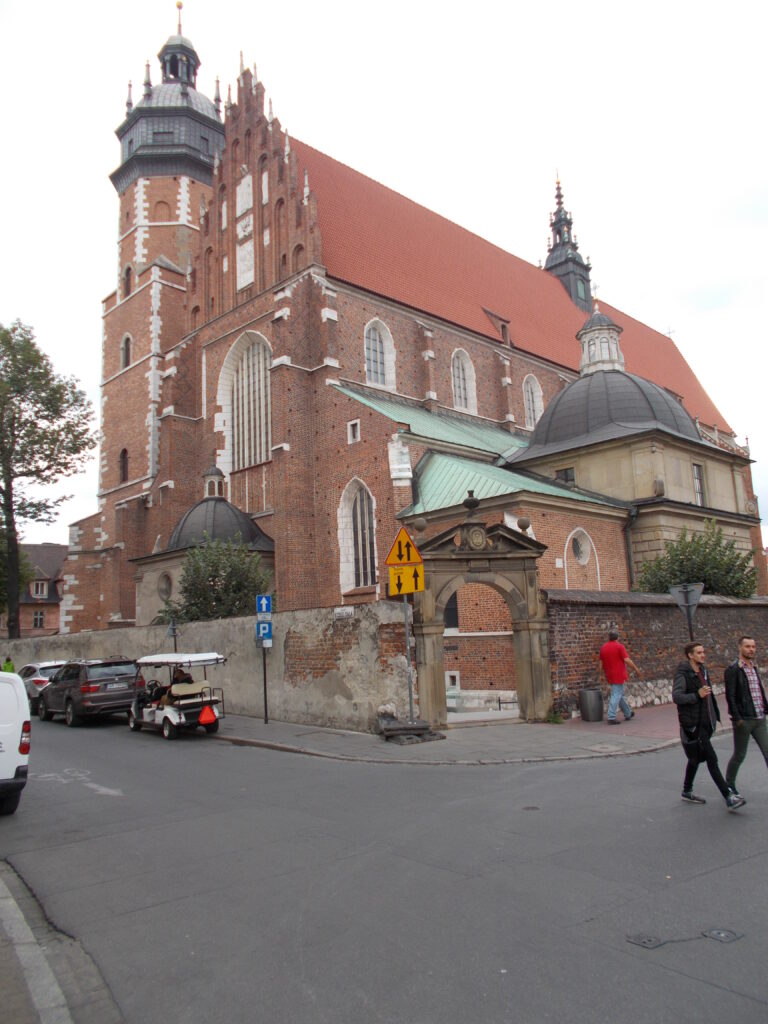
Basílica del Corpus Christi de Kazimierz, Krakow. Rudolph.A.furtado / Wikimedia Commons, CC0 1.0. Archive and dedication CC0 in Wikimedia Commons.
