
The tradition of the Holy Hostia of Dijon began in Monaco around 1430, passed through Pope Eugene IV and Philip the Good, was venerated for centuries in Dijon and ended up burned before the church of San Miguel in 1794.
A story that didn't start in Dijon
The traditional sign "Dijon, 1430" can induce you to think that everything happened in the capital of Burgundy. The diocese of Dijon explains that history began far from there in Monaco. Double geography is indispensable to understand the path of the host and its later veneration.
According to the account received, a woman bought from a used goods seller an ostensory that had probably been stolen. Inside it remained a great form destined for worship. In trying to remove it with a knife, the extraordinary sign would have occurred.
The sign attributed to the host
Tradition states that the form exuded fresh blood and that, when it was dried, an image of the Lord was printed with the arms extended, accompanied by instruments of the Passion. The description comes from the historical account reproduced by the diocese in 2024.
Today, the host is not available to examine it or a contemporary scientific analysis of the event. The fact sheet transmits the tradition with express attribution and does not present the medieval description as if it were the result of a modern test.
From Monaco to Pope Eugene IV
The news would have reached Pope Eugene IV soon. The diocese of Dijon summarizes that the Pontiff wanted to deliver the so-called Miraculous Hostia to the Duke Philip of Burgundy, Philip the Good, and that he offered it to the city of Dijon.
This transfer explains why a story born in Monaco almost completely identified with Dijon. The Borgoñona city was for centuries the center of custody, veneration and public memory, but not the place of the initial episode.
The Holy Chapel of Dijon
The host was placed in the duke's palate chapel, founded in the 12th century. Upon receiving it, that palace chapel was especially associated with Eucharistic devotion and was known as Sainte-Chapelle.
The diocesan tradition recalls great processions and illustrious pilgrims, including Louis XIII and Cristina of Sweden. These visits show the importance that the cult reached, but should not be confused with independent evidence on every detail of the 1430 story.
Signs of popular devotion
During the Modern Age the Holy Hostia was part of Dijon's religious identity. Processions, public prayer and visits of pilgrims kept their memory alive. The venerated object united the Passion represented in tradition with faith in the real presence of Christ in the Eucharist.
As with other ancient cults, the sources retain different layers: the narrated event, the political and ecclesial itinerary of the relic, and the devotional practices developed later. This sheet distinguishes those layers so as not to reduce a long story to a single prodigy.
The Revolution and the Transfer to San Miguel
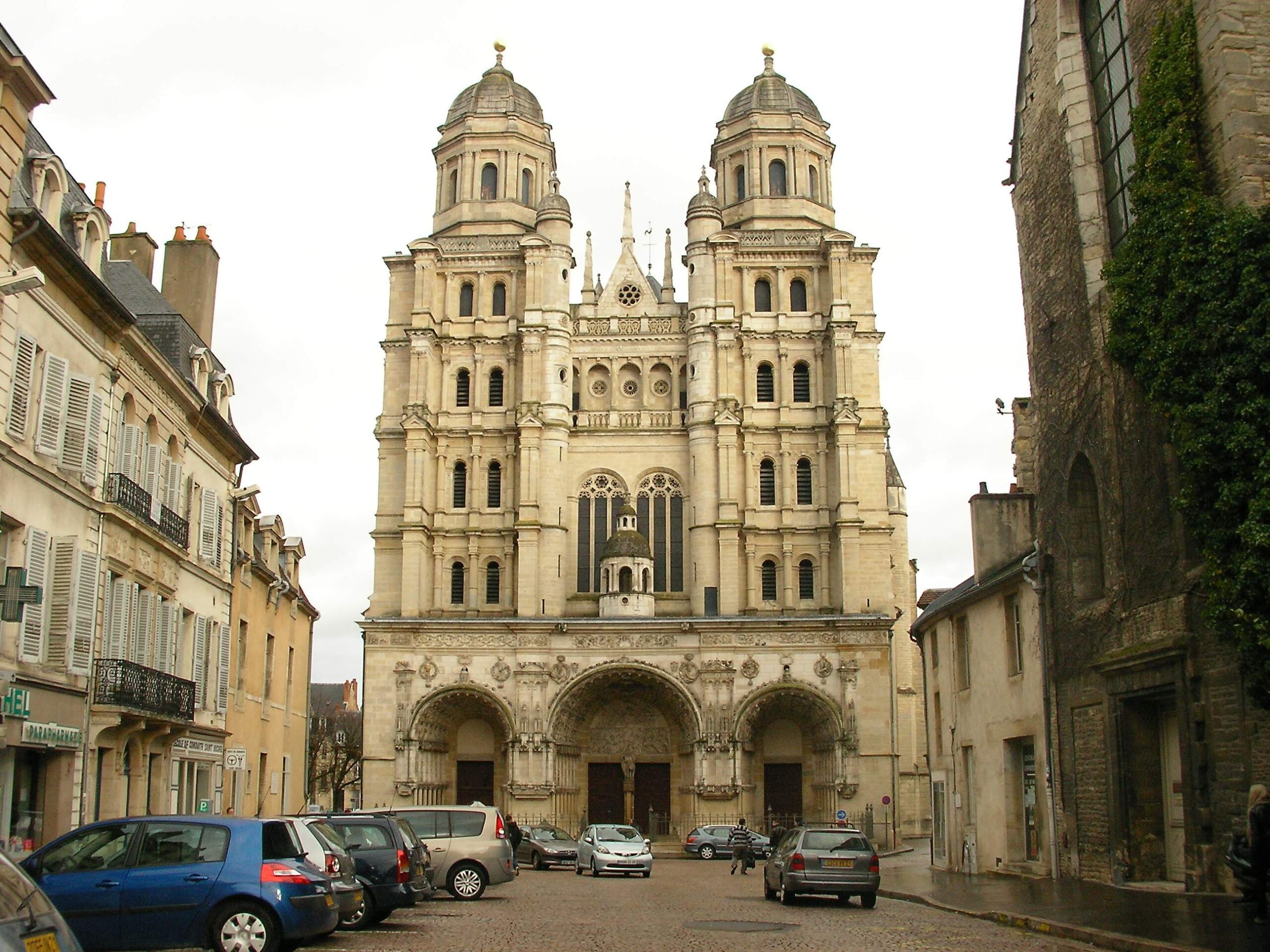
During the French Revolution, temples that were not parochial were closed. On 18 January 1791 the host was removed from the Sainte-Chapelle and moved to the church of San Miguel. There he was in the sacred of the altar of the Virgin.
San Miguel was therefore the last place of custody and not the original medieval sanctuary. The choice of the current marker responds to this final relationship and to the celebration that continues today, not to a claim to locate the episode of Monaco in Dijon.
The destruction of 10 February 1794
On 9 February 1794 the commune requested the church to make it a temple of the Reason. The next day, five community council agents burned the shit out of the building. The diocesan source specifically speaks of "brûlement" or burning.
From that moment on there ceased to be relic linked to the story. No responsible presentation can claim that a 1430 form is currently retained in Dijon. What remains is the historical, liturgical and urban memory of its destruction.
The extinguishing of the floor
A star embedded among the cobblestones before San Miguel today remembers the desecration. The diocese warns that no document can determine the exact point where the burning took place; the star functions as a memorial signal.
This nuance avoids transforming a later symbol into archaeological coordinate. The map points to the church and its immediate environment, while the text explains that the precise location of the 1794 act is not documented.
The perpetual mass of reparation
After the reopening of the temple, an old canon of the Sainte-Chapelle founded a mass of "perpetual" repair, dated February 10 at 10: 00 in the morning. It was first held on 10 February 1826.
Christian reparation does not seek to recreate the conflict or to point out current culprits. It is a prayer of disgust for an offence against the Most Holy, a request for forgiveness and renewal of the Eucharistic reverence. His continuity gives Dijon a living pastoral memory even without relic.
A celebration that continues
The diocese documented the mass of reparation of 2022 and again explained its history on the occasion of the celebration of 2024. In the latter, a white rose was deposited on the pavement star, after the Eucharist held in San Miguel.
Specific dates and forms may vary pastoral. Anyone who wishes to attend must consult the parish of San Miguel or the diocese of Dijon. The record shows a documented annual continuity, but does not replace the updated liturgical information.
Adoration and Holy Elizabeth of the Trinity
The diocesan memory relates this story to the perpetual worship that St. Elizabeth of the Trinity met at the end of the 19th century. In 2005, the Archbishop again instituted life worship in a nearby chapel attended by a Franciscan community of worshippers and repairing.
This continuity does not mean that the destroyed host has reappeared. He expresses that the ecclesial response to loss was directed towards the celebration of the Eucharist, the worship of the Most Holy and a life of reparation.
exact location on the map
The church of San Miguel is at the place Saint-Michel, 21000 Dijon, Côte-d'Or, Borgoña-Franco Condado, France. The coordinates 47.3210428, 5.0452436 place the temple and the environment of the outer memorial.
The marker bears the description "memorial building; origin of the story in Monaco; destroyed relic." This avoids presenting the church as a place in a preserved way or erasing the cross-border itinerary.
Responsible classification
The tab is classified as "cross-border historical tradition with destroyed relic." The category recognizes the account of 1430 and its long devotion, but places in the foreground the verifiable data of 1794 and the cult of reparation in force.
A current relic category is not used because it would be false. Nor is the case removed from the map, as the diocese maintains a specific celebration and offers recent pastoral documentation about its history and meaning.
Spiritual feeling
The path invites the Eucharist to be guarded with reverence and to respond to desecration without hatred. Christian reparation first looks to Christ, asks forgiveness for contempt of the sacrament and is committed to a more faithful life.
To worship the Lord must also lead to the recognition of his image in every person. A painful memory bears fruit when it begets peace, conversion, respect and charity, not when it is used to reopen enmity or to feed accusations.
Sources consulted
- Diocese of Dijon: History of the Mass of Reparation in San Miguel, main institutional source published in 2024.
- Diocese of Dijon: Mass of reparation of 2022, burning of 1794, foundation of 1826 and current worship.
- Diocese of Dijon: parish of San Miguel, current contact and location data.
- Exposure associated with San Carlo Acutis: Dijon, secondary devotional repertoire contrasted.
Para orar
Lord Jesus, present in the Eucharist, forgives any lack of reverence and purifies our heart. Make reparation become sincere worship, reconciliation, peace and service to our brothers. Amen.
Image credit
Church of San Miguel de Dijon, a memorial place of the host destroyed in 1794 and of the annual mass of reparation. Gzen92 / Wikimedia Commons, CC BY-SA 4.0. File and license in Wikimedia Commons.
.jpg)