
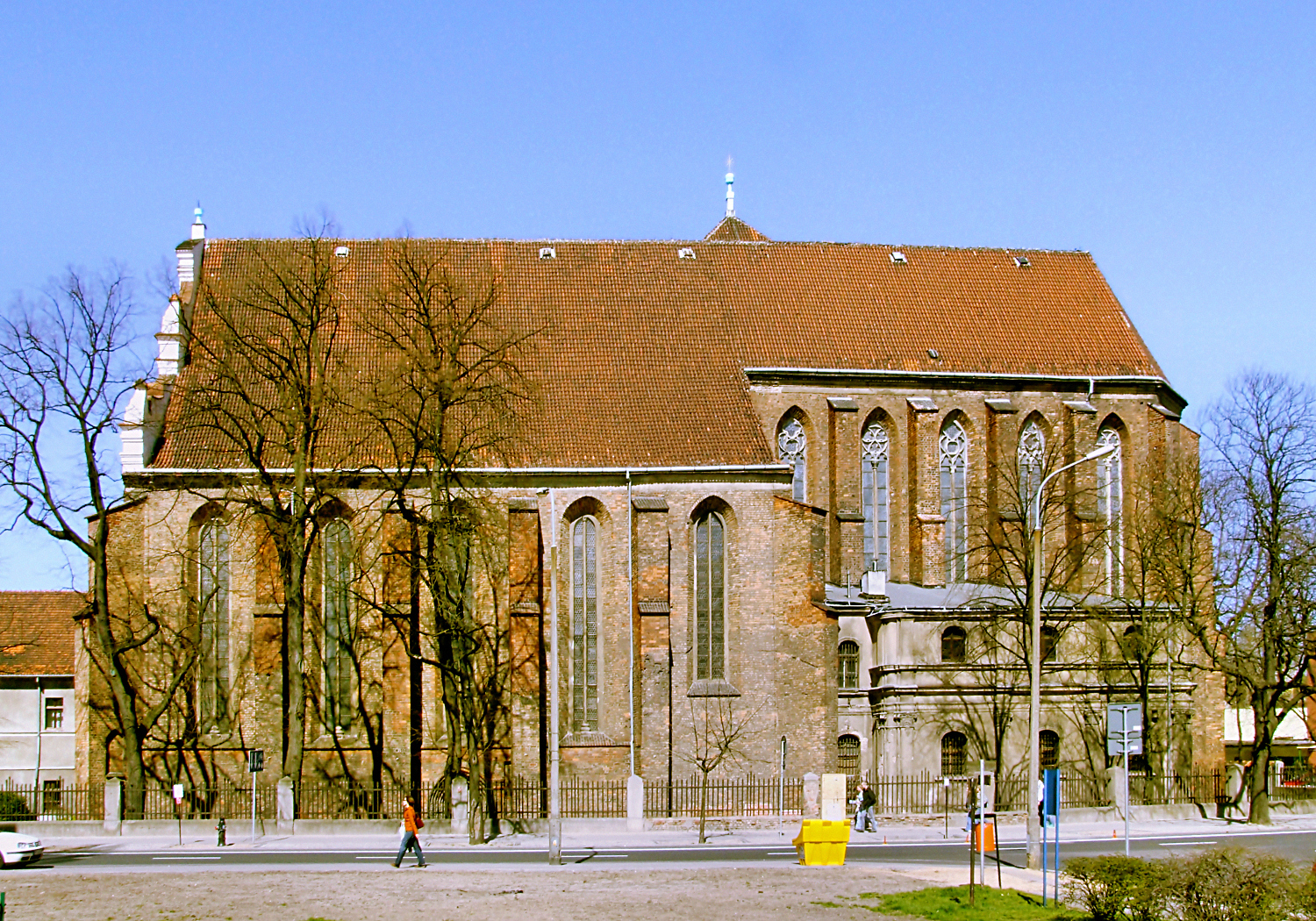
The shrine of Corpus Christi of Poznań retains a Eucharistic cult born in the late 14th century. The Archdiocese warns that the well-known accusation of desecration against the Jews is a late anti-Semitic legend not confirmed by medieval sources.
A true sanctuary and a legend that demands correction
The church of Corpus Christi in Poznań is a real place of prayer, Gothic architecture and secular Eucharistic memory. Its origin is related to the finding of a form in the meadows then located outside the city and to the devotion that developed in that place between the late 14th and early 15th century.
In time a much more elaborate story was formed: three hostias were reportedly stolen from the Dominican church, sold to Jews, stabbed and thrown to the meadows, where they were miraculously raised. The Archdiocese of Poznań today teaches that this accusation is not confirmed and belongs to a late anti-Semitic tradition.
What makes it possible to affirm medieval sources
The study published by the Archdiocese itself summarizes the documentary basis with sobriety. Medieval sources confirm that in the change from the 14th to the 15th century a host was found on the outer grounds of Poznań. In the place was first raised a chapel and then a church of Corpus Christi with a convent of shaded Carmelites.
King Vladislao II Jagellon linked his patronage to the foundation. The parish retains the memory of a founding document of 1406 and a formula that referred to the place where the Body of the Lord was prodigigiously found. These data support the early birth of the cult, not the accusatory details incorporated later.
The Legend of the Three Hosts
The popular version ended up dating the alleged desecration on August 15, 1399. He added a woman who would have taken away the forms, a sale to members of the Jewish community, wounds inflicted on the host, blood, her abandonment in a meadow and the discovery by a shepherd.
The historical research cited by the Archdiocese does not find these elements in medieval sources. They are considered to be a composition formed on the grounds of other anti-Jewish accusations that circulated across Europe. The detailed version appears when the sanctuary had been built for a long time.
Why can't the accusation be repeated as a story
The legends of desecration of hosts were used in different European cities to feed hostility, expulsions and violence against Jewish communities. To present them today as facts, without support from contemporary sources, prolongs an injustice and contradicts the Christian duty to respect the truth and dignity of each people.
The document of the archdiocese recalls the declaration of reconciliation Our aetatewhich deplores the hatred, persecution and manifestations of anti-Semitism directed against Jews. It also places the historical correction within the current relations between the Church of Poznań and the local Jewish community.
When the narrative developed
According to the Archdiocesan research, pilgrims or Carmelites were able to adapt to the context of Poznań known stories elsewhere. In the late 16th and early 17th century, some two hundred years after the foundation of the sanctuary, publications of Tomasz Rerus and Tomasz Treter revived the legend and set details.
In the 18th century, the church of the Precious Blood of the Lord was built in the building to which tradition attributed the alleged desecration. The existence of paintings, frescoes and later temples demonstrates the influence of legend, but does not turn its argument into a testimony of the 14th century.
The real development of the Eucharistic cult
The parish documents that during the 15th and 16th centuries the sanctuary received pilgrims from many regions of Poland and from neighbouring territories. Devotion grew around Corpus Christi and left a memory of graces attributed to prayer in place.
The church went through wars, abandonment and restorations. In 1899, Archbishop Florian Stablewski directed it to the parish. In 1930 Cardinal August Hlond began the First National Eucharistic Congress there, and since 1996 he has been part of the temple the central procession of Corpus Christi of the city. This liturgical history remains even if the legendary accusation is corrected.
A purified Christian memory
Defending a tradition does not destroy the sanctuary. On the contrary, it allows the Eucharist to be venerated without making another people an imaginary adversary. The Christian faith confesses to Jesus, a Jew of birth, and receives from Israel the Scriptures, the promises and a spiritual heritage that he cannot treat as something other than anything else.
The pilgrimage can thus become a prayer for reconciliation, for the victims of anti-Semitism and for a responsible reading of religious heritage. Historical truth and devotion do not compete: both reject false testimony.
Location and visit
The Sanctuary of Corpus Christi is at Strzelecka street 40, 61-846 Poznań, Polonia. The marker uses coordinates 52.4006618, 16.9330429 and points to the historical building, not the supposed scenario of each legendary detail.
Before travelling it is appropriate to confirm with the parish the masses, celebrations and conditions of visit. The temple remains a living community and not only a monument associated with a medieval account.
World map classification
Poznań is incorporated as "late anti-Semitic legend; critical historical memory." The category recognizes the sanctuary, medieval finding and Eucharistic veneration, while preventing the map from divulging as a proven miracle an accusation rejected by the research of the local Church itself.
Spiritual feeling
To worship the Eucharist is to recognize the given Body of Christ and to commit to not injuring his image in any human being. The Sacrament of unity cannot be celebrated while a slander against a people is preserved.
The memory of Poznań invites to unite veneration, truth, repentance and fraternity. The Eucharistic cult becomes credible when it produces justice, reconciliation and respect.
Sources consulted
- Archdiocese of Poznań: "The Legend of the Three Hosts", the main historical and pastoral assessment.
- PDF Archdiocesan Document on Legend.
- Parish of Corpus Christi: history of the sanctuary and the cult.
- Exhibition associated with San Carlo Acutis: Poznań, source of disclosure tested and corrected.
Para orar
Lord Jesus, Bread of unity, forgive us our prejudices, deliver us from false witness and make us servants of truth, reconciliation and peace. Amen.
Image credit
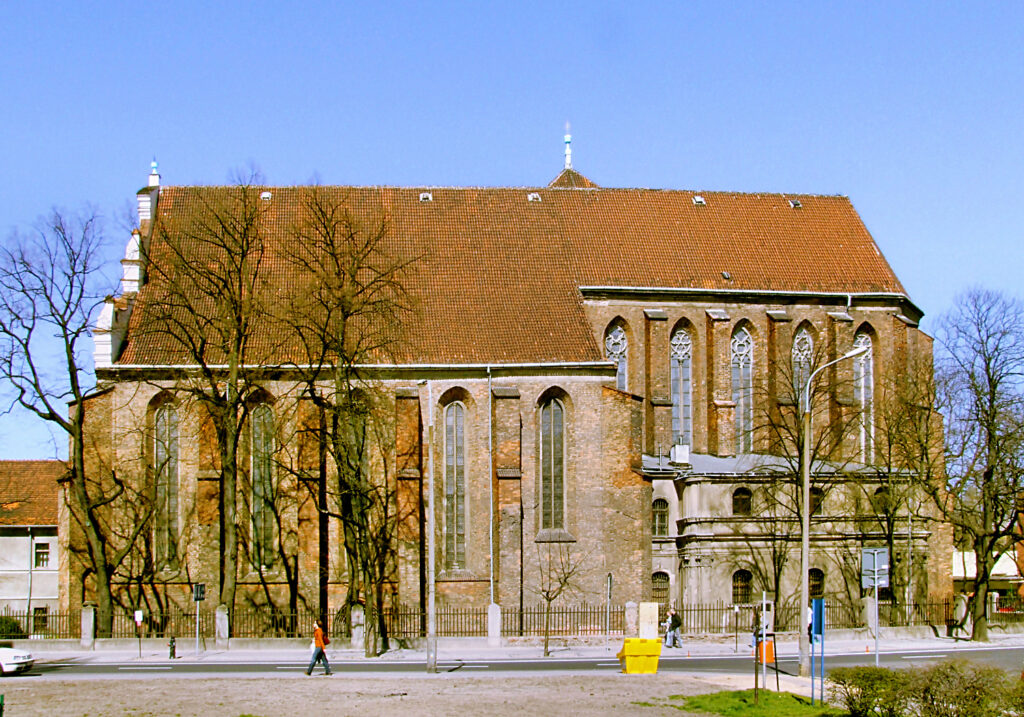
Santuario del Corpus Christi de Poznań. Roweromaniak / Wikimedia Commons, CC BY-SA 2.5 PL. File and license in Wikimedia Commons.
