
An accident during a viatic in Ratisbona in 1255 originated the Salvatorkapelle and a medieval pilgrimage. The tradition then added a prodigy attributed to a crucifix; the chapel was demolished in the 19th century and it has not been verified where that object is preserved.
The Holy Thursday of 1255
The local historical research date the beginning of March 25, 1255, Holy Thursday. A priest took the Eucharist to a sick man and slipped as he crossed a small bridge over the Vitusbach, a watercourse that then ran open by the Bachgasse.
The forms fell or spilled. The tradition stated that they were collected prodigiously, by angelic or human hands according to the versions. It is appropriate to distinguish the liturgical accident, the core of memory, from the extraordinary explanation that piety added.
A bridge with a historical name
The step was known as Judensteg because he was driving to the Jewish neighborhood of the medieval city. This name describes the urban geography of the time and does not attribute any responsibility to the Jewish community in the accident.
The tab avoids transforming a spatial reference into a religious accusation. The priest slipped during a viatic; the story should not be used to perpetuate prejudice against those living near the bridge.
The chapel raised in three days
The citizens reacted quickly and built a wooden chapel between March 25 and 28. Bishop Albert I consecrated it on 8 September 1255 in honor of the Saviour, from where the name comes Salvatorkapelle.
The chronology is collected by historical studies of Ratisbona that refer to inscriptions and medieval documentation. The existence of the chapel and its consecration offer a firmer basis than some miraculous details transmitted by devotion.
De Salvatorkapelle a Kreuzkapelle
The first chapel was later associated with a valuable crucifix and became known as Kreuzkapelle, chapel of the Cross. Around 1260, a larger church and a small monastery were erected for the hermit agustines.
In 1267 the council of the city gave church and chapel to the Augustines. The whole became an important conventual and study center, and the memory of the Eucharistic accident was integrated into its identity.
The later legend of the crucifix
The panel of the exhibition of Carlo Acutis also recounts that, two years later, a priest in doubt celebrated Mass before a crucifix and that the image extended a hand to take the chalice. This scene is different from the 1255 accident.
The 18th century pilgrimage medal preserved by the Munich State Coins Collection represents Christ on the cross taking the chalice of a priest. The existence of that image shows that the legend was then circulating; it does not in itself show that the episode was observed in 1257.
The pilgrimage medal
Bavarikon catalogues a gold medal, dated in the 18th century, dedicated to the pilgrimage of the Kreuzkapelle of the Augustino convent. His anverse represents the chalice scene and his reverse to Saint Augustine.
This historical object documents the veneration, iconography and late receipt of the story. It is not a relic of the event of 1255 and should not be confused with the crucifix that appears represented.
Demolition of the whole
After the secularization, the conventual buildings had new uses and suffered a growing deterioration. The Augustine church was demolished in 1838 because of its poor state; the old chapel disappeared during the later urban transformations of the 19th century.
Today there is no active Eucharistic sanctuary on that site. The current buildings should not be presented as the medieval chapel or the visitor is invited to seek a relic exposed there.
The unlocated crucifix
Some versions claim that the crucifix was moved and remains "in a nearby city." No institutional source has been found to identify the exact temple, museum or storage site.
The fact sheet does not repeat that fact as a certainty. To locate inventory, catalogue number or custody institution, the whereabouts of the alleged crucifix should be considered unverified.
The solar and the accuracy of the map
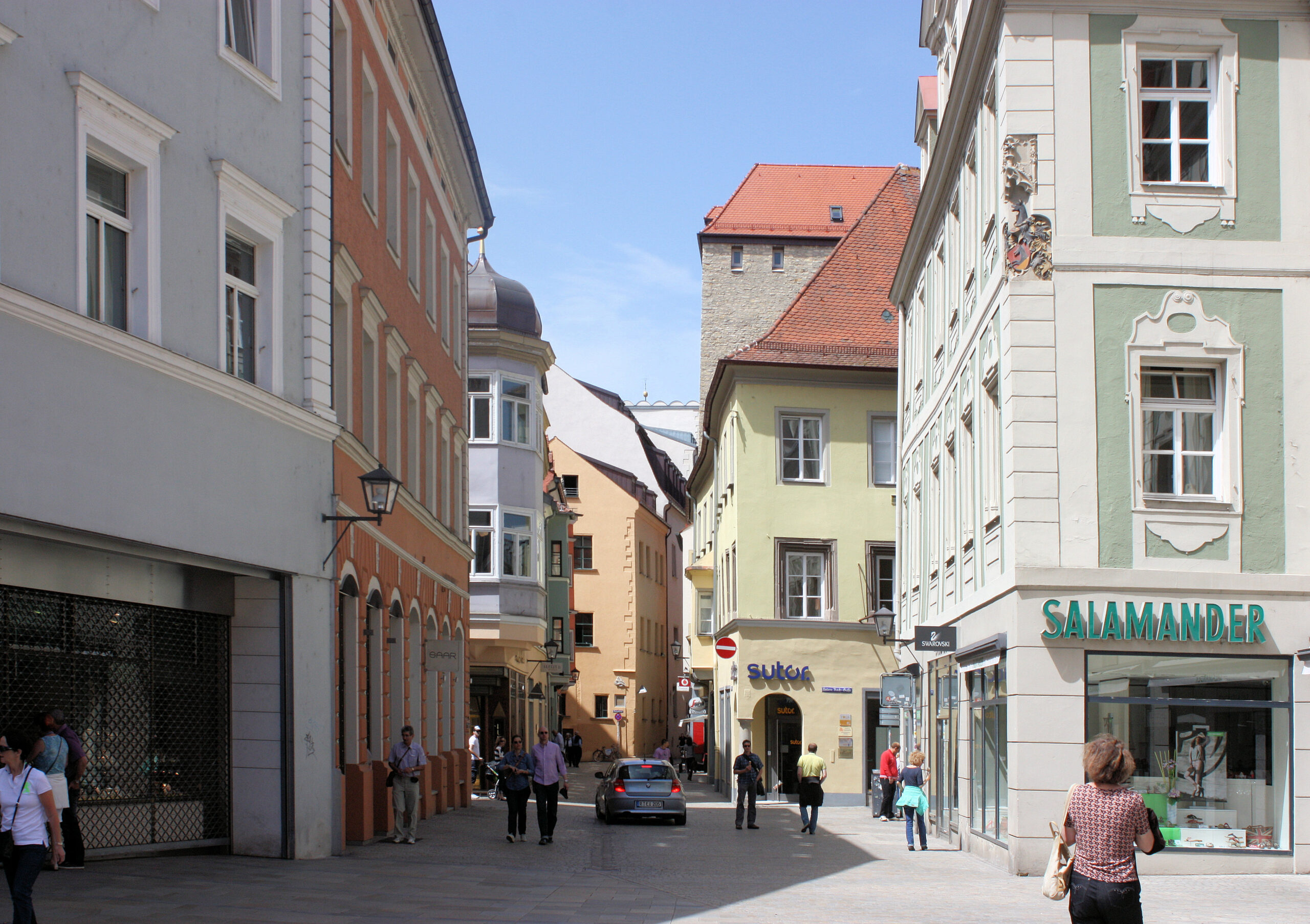
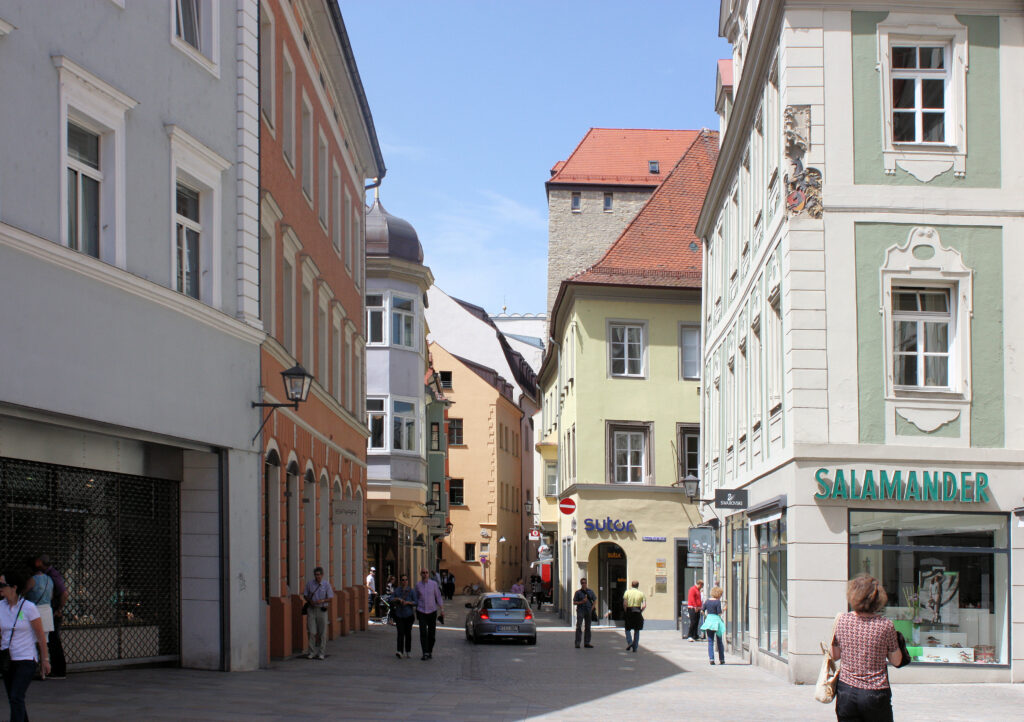
The old chapel was located in the context of the current confluence of Gesandtenstraße and Bowe Bachgasse, in the historic centre of Ratisbona. The marker uses 49,0185000, 12,0946000 as an approximate reference of the historical site.
It does not amount to an archaeological coordinate of centimeters or a preserved building. The map points to a missing urban memory and the text warns that condition in a visible way.
World map classification
Ratisbon is incorporated as "historical tradition with missing sanctuary." This category allows to document the accident, the chapel, the convent and the pilgrimage without presenting an existing cult or a localized relic.
The label also separates the 1255 event from the legend of the crucifix represented centuries later. Both are part of the history of reception, but they do not have the same documentary closeness.
Spiritual feeling
The immediate construction of the chapel expresses the medieval desire to repair a Eucharistic accident. Authentic Christian reparation is born from the love of Christ and leads to the care of celebration, reconciliation and service of others.
That the sanctuary has disappeared recalls that faith does not depend on keeping each building. The Eucharist continues to be celebrated in the Church and calls to live with reverence, truth and charity.
A city transformed over the ancient solar
The disappearance of the Salvatorkapelle and the Augustino convent prevents a visit similar to that of a preserved sanctuary. Streets, buildings and urban uses replaced the whole; the coordinate works as a historical reference and not as an invitation to enter an existing chapel.
The medal preserved in Munich and the studies on the convent make it possible to rebuild the memory better than a hasty visual identification. The visitor can travel the area by understanding that he is looking at a later urban plot.
Accident, repair and legend
The accident during the viatic caused the immediate construction of a chapel. The scene of the crucifix that takes the chalice belongs to another layer of tradition, represented centuries later in objects of pilgrimage. Uniting both without warning would produce a false chronology.
This separation serves as a method for other cases: first the best documented event is identified, then the foundation of the cult and finally the images or wonders added by the devotional reception.
Memory without localized relic
No institutional inventory has been found to establish where the crucifix attributed to legend is. To say that it is preserved "in a nearby city" without name, catalogue number or custodian is not enough to guide the pilgrim.
The absence of such data is open to future investigations. If a church or museum publishes a verifiable identification, it may be added without deleting the previous caution and always distinguishing the historical object of miraculous interpretation.
The accuracy of the medieval toponym
The historical name of the bridge is preserved only to place the accident in the medieval city. It does not bring a religious cause to the slip or involve the participation of Jewish neighbours. Any accusatory interpretation would be a deformation of urban data.
This caution is necessary because pious European accounts were sometimes used to feed anti-Jewish hostility. The Eucharistic memory must be narrated without repeating prejudice and with respect for the communities that shared the city.
Guidance for the reader
Those who investigate Ratisbona must look separately for the history of the Augustine convent, the topography of the Bachgasse and the objects of pilgrimage. This separation helps to locate reliable sources and prevents the 18th century medal from being confused with a 13th century eye witness.
The map and bibliography of this document offer the starting points, not a definitive archaeological identification.
Sources consulted
- Urban history of Ratisbona: study on the Augustine church, accident chronology, chapel and set.
- Bavarikon / Munich State Coins Collection: Pilgrimage Medal, historical object and iconography.
- House of Bavarian History: antiguo convento agustino de Ratisbona, historia institucional.
- Exposure associated with San Carlo Acutis: Ratisbone, dissemination offence sometido in contrast.
Para orar
Jesus the Eucharist, give us reverence, humility and truth. Make us repair our faults with concrete love and deliver us from turning the sacred memory into overstatement or prejudice. Amen.
Image credit
Current confluence of Bare Bachgasse and Gesandtenstraße in Ratisbona. Dguendel / Wikimedia Commons, CC BY 3.0. File and license in Wikimedia Commons.
