
During the looting of Volterra in 1472, a tradition claims that a soldier threw a copon and that the forms were suspended and luminous. The looting is documented by municipal sources; no relic, specific ecclesial decree or the original complete file of the prodigy has been located.
The War of Alusion and the Plunder of 1472
In 1472 Volterra was conquered by Florentine forces commanded by Federico da Montefeltro. The conflict was linked to the control of alumbre mines, a valuable raw material for the textile industry. The City Council's historical guide describes looting as one of the most devastating episodes of the city.
After the defeat, Volterra was integrated into the Florentine State and submitted to the power of the Medici. The construction of the new fortress, the destruction of neighborhoods and the appropriation of property transformed the city. This military context is independent and documentally stronger than the Eucharistic prodigy transmitted later.
The soldier and the copon
The panel of the repertoire associated with San Carlo Acutis tells that a Florentine soldier entered the cathedral of Volterra and took from the sacred a ivory copon with many consecrated forms. As he went out, he would have thrown the container against an outer wall.
The forms were scattered and, according to the narrative, were raised for a time, wrapped in a mysterious light. The soldier fell terrified, repented and began to cry before numerous witnesses.
What source claims to keep the story
The exhibition mentions a relationship written by Fra Biagio Lisci, presented as a direct witness, and states that it is preserved in the archives of the church of San Francisco. He adds that there are municipal records in the Volterra library.
These references are potentially valuable, but the panel does not provide archival symbol, manuscript date, full transcription, photographs or critical editing. These originals have not been located online in the investigation of this file. It is therefore not said that the available text is a literal copy of a 1472 record.
Catedral and iglesia de San Francisco
The narration places the soldier's entrance to the cathedral, while linking Lisci's writing to the San Francisco archive and also reproduces an image of that temple. These two references should be kept separate: a file can guard a document over another place, but the panel does not explain the source in sufficient detail.
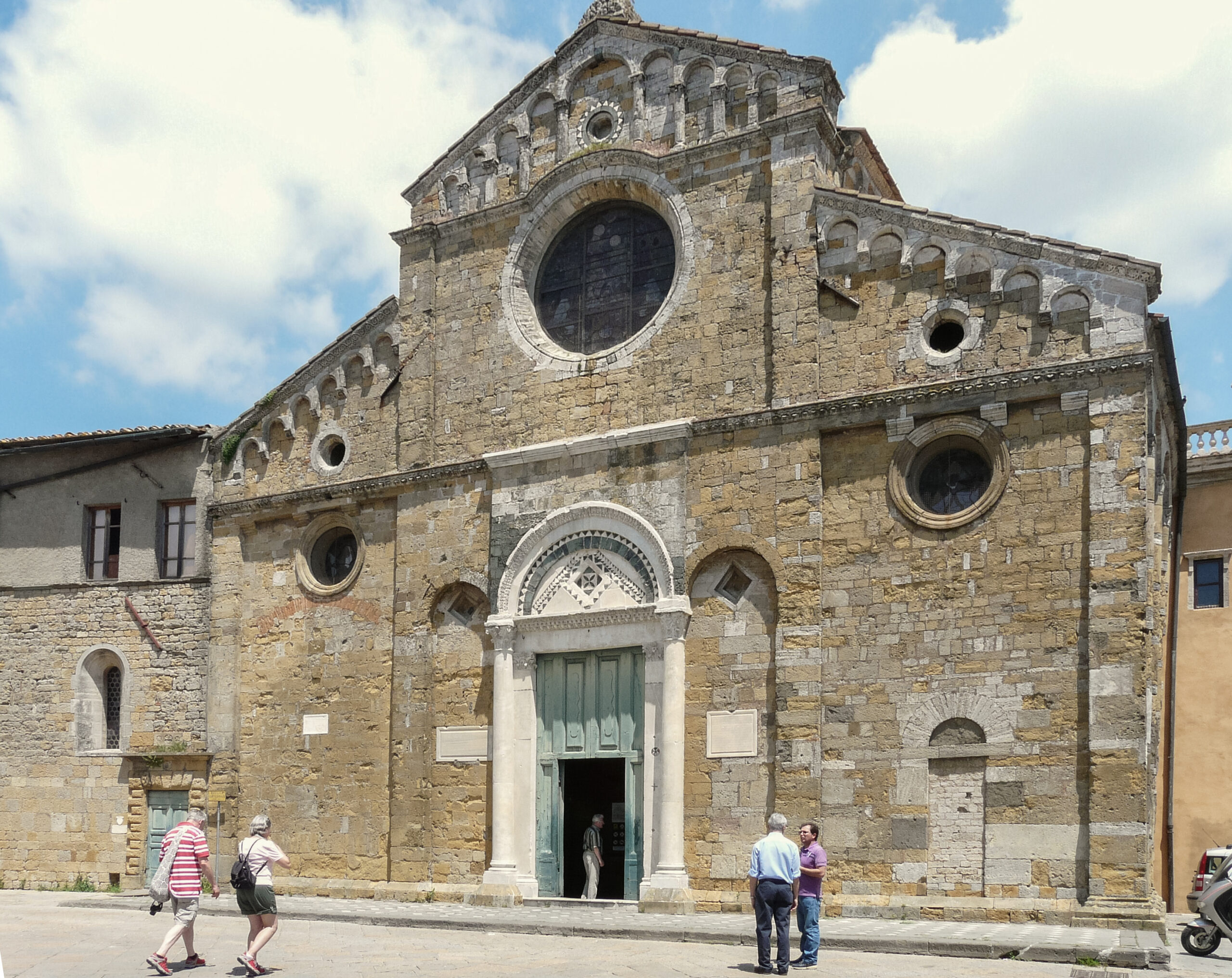
The marker is placed in the cathedral of Santa Maria Assunta, the place that the source identifies as the stage of the theft of the Copon. A second marker is not created in San Francisco because it is not presented as an unequivocal scenario of the prodigy.
Lo que no se conserved o no se ha located
No form, body, ivory copon or other material relic has been identified today as coming from the episode. Nor has a party of its own, a chapel dedicated specifically to the event or a decree of the Diocese of Volterra declared it a miracle.
The absence of these elements does not prove that they never existed, but limits what can be affirmed. The fact sheet speaks of historical tradition and not of preserved relic or formal ecclesiastical recognition.
The danger of confusing context and prodigy
That the looting of 1472 is a fact does not automatically test all religious episodes attributed to the soldiers. In times of war, violence, desecration and loss of sacred objects occurred; each specific account requires its own documentation.
Prudence avoids circular reasoning: the history of war is not used to authenticate the light elevation, or devotional narration to complete military details that municipal sources do not offer.
The catedral de Santa Maria Assunta
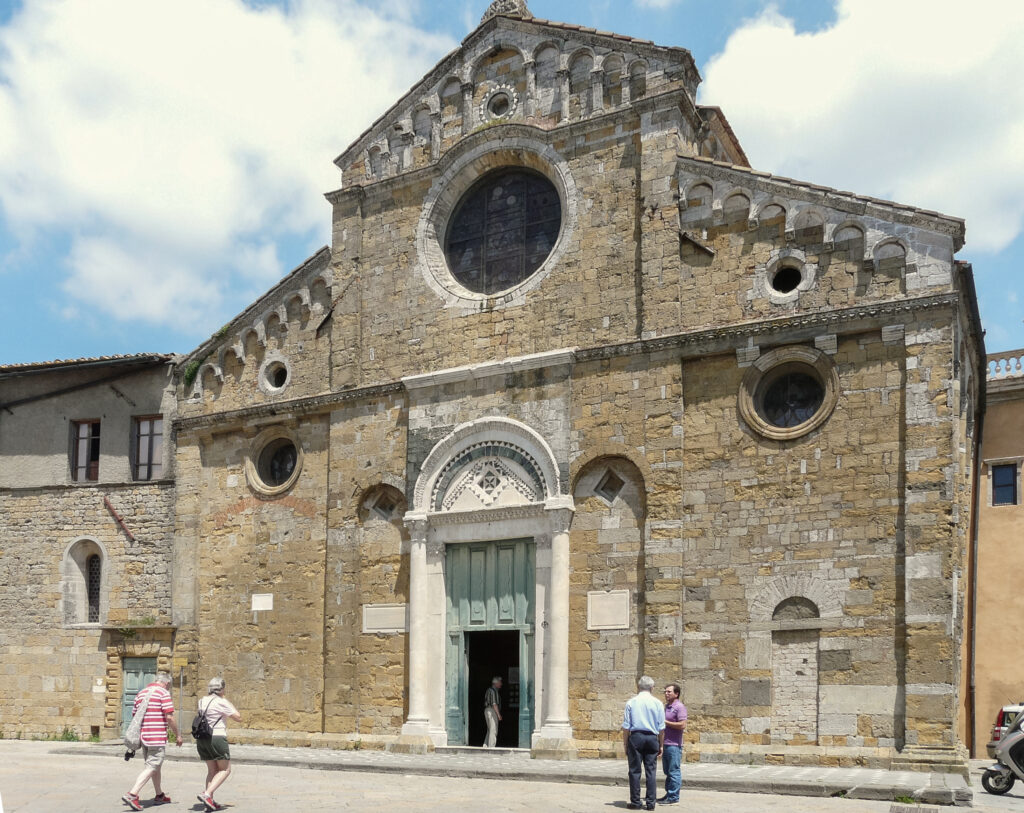
The cathedral is the historic seat of the Diocese of Volterra and one of the main temples of the city. Its Romanesque facade, interior and artistic works belong to a much broader history than the episode attributed to 1472.
The diocesan community continues to celebrate the Eucharist in Volterra. This current sacramental life is verifiable and does not depend on the preservation of a relic of plunder.
Location and visit
The Cathedral of Santa Maria Assunta is in Piazza San Giovanni de Volterra, Tuscany, Italy. The marker uses coordinates 43.4017869, 10.8589964 and points to the cathedral building.
The information of the diocese or the temple should be consulted before visiting. The forms of 1472 should not be expected to be found exposed: no associated material relic has been located.
World map classification
Volterra is incorporated as "historical Eucharistic tradition without preserved relic." The label recognizes the proven context and the transmitted memory, and reports that the primary accessible source, relic and a specific ecclesial act are missing.
Spiritual feeling
The memory of a Eucharist outraged during a war invites us to pray for peace and to repair all violence against people and holy places. Christian reparation is not to feed hatred towards ancient enemies, but to reconcile, protect and serve.
The real presence of Christ is celebrated today in every mass. The faithful does not need to state as certainty all the details of a tradition to approach the Sacrament with reverence.
Sources consulted
- Volterra City Council: history of the conquest and looting of 1472, institutional source for the context.
- Diocese of Volterra, institutional reference of the temple and the present community.
- Exposure associated with San Carlo Acutis: Volterra, source of the extraordinary account submitted to caution.
Para orar
Jesus the Eucharist, give us peace, reverence and mercy. Sage the wounds of violence and take care of your presence and the dignity of each person. Amen.
Image credit
Catedral de Santa Maria Assunta de Volterra. Davide Papalini / Wikimedia Commons, CC BY-SA 3.0. File and license in Wikimedia Commons.
