
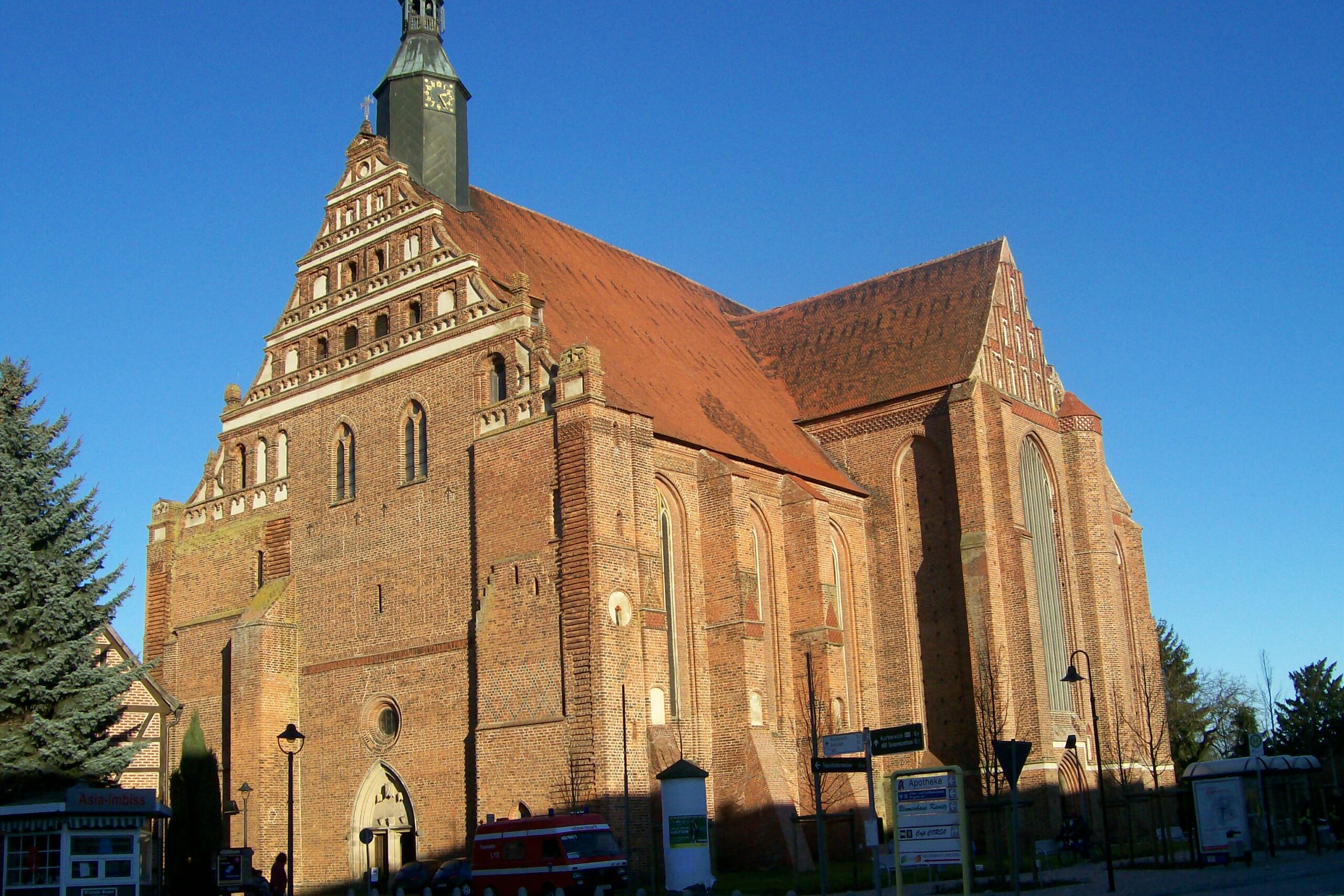
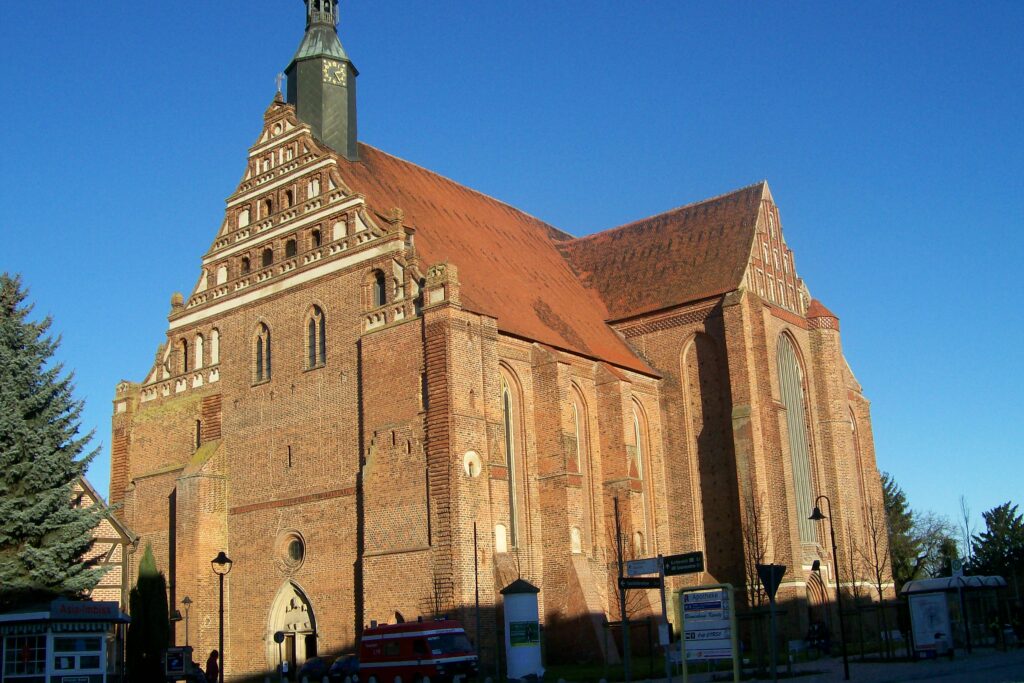
The Wilsnack tradition was born after the fire of 1383 and made the church of St. Nicholas one of the largest pilgrimage destinations in Europe. The alleged bleeding hostias were discussed for decades and destroyed in 1552; today the Gospel temple retains historical memory, not a Eucharistic relic.
What happened according to the tradition of 1383
In the summer of 1383 a fire destroyed much of Wilsnack, including his church. The narrative transmitted by the present parish identifies the gentleman Heinrich von Bülow as the cause of the devastation. When the priest returned to the ruins, he claimed to have found three consecrated forms that had not been consumed by fire and showed blood-like stains.
This is the core of the story that gave name to the Wunderblutkirchen, the "church of miraculous blood." The fact sheet speaks of tradition and supposed hostility because the preserved sources document the later cult very clearly, but they do not allow the objects to be examined today: they were destroyed in the 16th century.
From a village on fire to a European pilgrimage
The news spread with extraordinary speed. Wilsnack, a small town in Brandenburg, began to receive pilgrims and ended up being part of the great religious routes of tardomedieval Europe. Passengers arrived from the German, Bohemia, Hungary, Poland, the Netherlands and Scandinavia territories.
The influx transformed the place. The offerings financed a much larger temple than the village and favored the production of pilgrim badges. Princes, inhabitants of Hanseatic, sick and penitent cities went long distances for comfort, healing or indulgences. The architecture that is being seen today is inseparable from that international dimension.
Indulgences and church support
Bishops of Brandenburg, Havelberg and Lebus, the Archbishop of Magdeburg and later Roman Curia authorities granted indulgences related to the visit and work of the church. These decisions explain the growth of the sanctuary and show that the cult received real support within the medieval Church.
However, a indulgence or permission for a pilgrimage does not in itself amount to a scientific certification of the origin of a stain. Nor can history be reduced to a phrase of "papal approval": there were prohibitions, research, political interventions and subsequent decisions with a different sign.
The objections of Prague and Jan Hus
In 1405 the archbishop of Prague forbade his faithful to pilgrim Wilsnack. In the Bohemian reformative environment, Jan Hus questioned the stories of wonders, the use of alleged bleeding hostias and the abuses that could surround the mass pilgrimages.
These criticisms are part of the history of the place and should not be hidden. They reveal an ancient theological concern: Eucharistic devotion needs discernment, and the desire for an extraordinary sign cannot replace faith, conversion or responsible examination of the facts.
The Heinrich Tocke inspection
The theologian and canon Heinrich Tocke examined the contents of custody during the 15th century. His description was very critical: he spoke of matter consumed or similar to a web, not of intact forms as popular devotion imagined.
His testimony shows that the controversy was not a modern invention. Within the medieval Church itself there were voices that asked to verify the object and correct statements difficult to sustain. Including them does not reduce the Eucharistic reverence; it protects the truth that this reverence demands.
Nicolás de Cusa and the 1451 ban
During his 1451 legation, Cardinal Nicholas of Cusa acted against the display of alleged bleeding harms. His measure affected Wilsnack and sought to stop practices he considered theologically problematic or unproven.
The episode confirms that there was no uniform acceptance. The election Federico II of Brandenburg defended the pilgrimage and appealed to Rome. In 1453 the verdict was lifted and the cult could continue. This reversal legitimized its historical continuity, but does not remove the previous doubts or turn all pious versions into proven facts.
The great church of St. Nicholas
The present church of St. Nicholas, of Gothic brick, was raised and expanded in relation to the flow of pilgrims. Its dimensions, much higher than expected in a small population, are a visible document of the importance that Wilsnack achieved.
The building survived the confessional changes and today serves an evangelical parish. The community conserves and explains the story as "legend," takes care of the heritage and receives visitors. This current framework deserves to be respected: it is not right to present the temple as if it still guarded the three harlots.
1552: destruction of the host and end of veneration
The pilgrimage ended in 1552, in the context of the Reformation. The Protestant preacher Joachim Ellefeld burned the three harlots that were venerated in the church. For this action he was imprisoned at the initiative of the cathedral cabildo.
Since then there has been no relic that had articulated the cult. The data forces a distinction between a historic pilgrimage destination and a living Eucharistic sanctuary. What remains is the temple, documentation, cultural memory and a complex history of faith, criticism and conflict.
What the visitor can see today
In Bad Wilsnack you can visit the evangelical church of St. Nicholas or Wunderblutkirche, located in Große Straße 55. The map marker uses coordinates 52.9558980, 11.9459073 for the preserved historical building.
The location is necessary to know the place of memory, not to venerate a current relic. Before you travel, you should consult the times and activities of the parish, behave with respect and remember that you enter a Christian temple in use belonging to another confession.
How it is classified on the world map
Wilsnack appears as "extinct and controversial medieval cult." The category allows to preserve an important piece of European Eucharistic history without equating it to cases with guarded relics, contemporary research or current Catholic veneration.
The map leads to the real building and the text makes its limits clear. This transparency helps to understand why the exhibition associated with San Carlo Acutis spread the case, while incorporating the contrast of the present parish and regional historical research.
A spiritual and ecumenical reading
Wilsnack invites us to contemplate both the thirst of God for countless pilgrims and the need to discern. The Catholic faith does not depend on accepting every medieval narrative. Its center is Christ truly present in the Eucharist celebrated by the Church, not the relentless search for extraordinary signs.
The Gospel present of the temple also asks for a fraternal look. Catholics and Protestants remember that history differently, but they can be found in love for Jesus Christ, respect for consciousness, the honest study of the past and the defense of the common heritage.
The value of keeping a story discussed
That the harms were destroyed and that the cult received criticism did not make Wilsnack a useless memory. Its architecture, its pilgrimage paths and abundant documentation allow us to study how it was formed, regulated and finally ended one of the great devotions of medieval Europe.
It also teaches that discernment within Christianity has history. Tocke, Nicolás de Cusa and other critics did not speak from a world indifferent to the Eucharist; they discussed how they should be venerated and what claims could be held.
The hospitality of the present temple
The evangelical community that takes care of St. Nicholas receives visitors interested in architecture and the past of the place. To come with ecumenical attitude means to hear how he presents his own church and not to demand Catholic practices in a temple of another confession.
The visit can become an occasion of prayer for unity. To remember medieval disputes and conflicts of the Reform does not force them to be repeated; it invites us to seek a shared truth with humility and respect.
What the visitor will not find
You will not find the three hosts of 1383, a custody with equivalent relic or an active Catholic pilgrimage to "Wunderblut." The historical name remains in the name of the building and in the cultural memory.
Explicate these absences avoids displacing the present community or promising a non-existent experience. The map points to a place of critical memory: there a story is understood, the preservation of its ancient object of veneration is not certified.
A fact sheet open to the investigation
The critical classification does not aim to dictate a definitive conclusion on all the experiences of the medieval pilgrims. It orders what can be verified: the rise of veneration, disputes, ecclesiastical decisions, destruction of objects and the present state of the temple.
New file, badge or route studies can enrich Wilsnack's social history. They must be incorporated without again presenting the hostias as preserved or erasing the plurality of judgments that existed at their own time.
Sources consulted
- The Evangelical Parish of Bad Wilsnack: Legend of the Wunderblutkirche, institucional relate of actual templo.
- Brandenburgikon: Wilsnack as a place of pilgrimage and memory, regional historical context.
- Exposure associated with San Carlo Acutis: Wilsnack, informative account contrasted with previous sources.
Para orar
Jesus the Eucharist, give us a reverent and true faith. Purify our desire for signs, make us seek you in the celebration, in your Word and in the love of your neighbor. Sana the wounds of division and teach us to remember the past with humility, justice and charity. Amen.
Image credit
Wunderblutkirche de San Nicolás en Bad Wilsnack. MrsMyerDE / Wikimedia Commons, CC BY-SA 3.0. File and license in Wikimedia Commons.
