
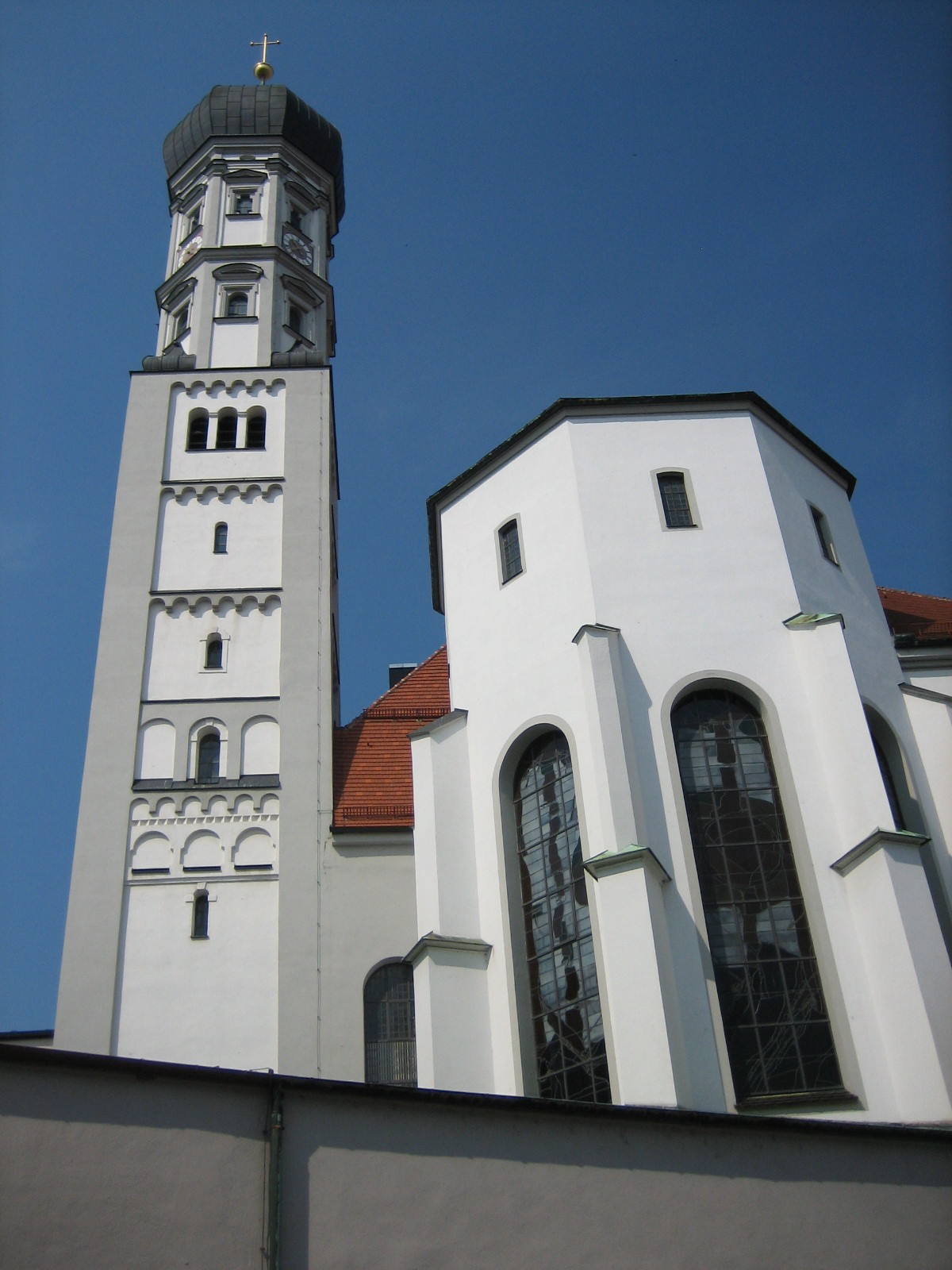
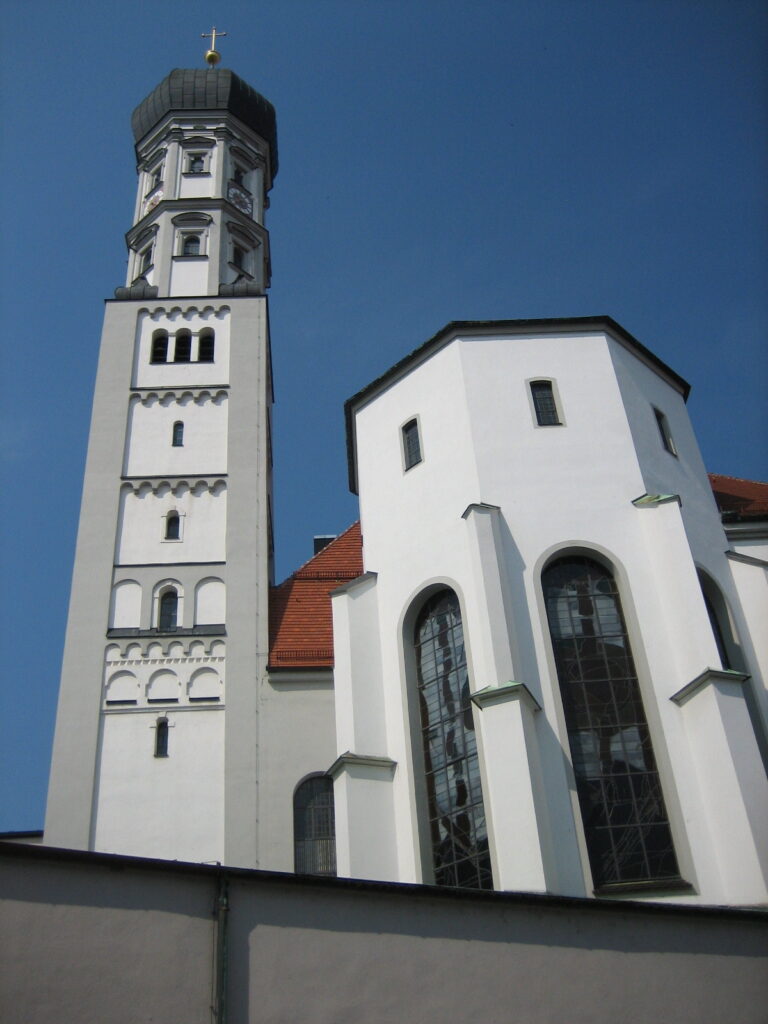
The church of Heilig Kreuz has held since 1199 the so-called Wunderbarliches Gut, a form that tradition describes as transformed and that caused a Eucharistic pilgrimage still in force. The chronology distinguishes the beginning attributed to 1194 from the return and episcopal examination of 1199.
Qué significa Wunderbarliches Gut
The German expression Wonderful Good can be translated as "Well wonderful." It is the traditional name with which a consecrated form related to an episode of the late 12th century is venerated in the Catholic church of Heilig Kreuz.
The name directs attention to the gift of Christ in the Eucharist. Devotion should not be confused with an automatic promise of healing or an object of independent power: its current framework is mass, worship, confession and community prayer.
1194: the attributed beginning
The repertoire of Carlo Acutis rotates the case as Augsburg 1194. According to the traditional narrative, a woman received communion and took the form home. There he wrapped it in wax and kept it for several years.
The later versions explain in different ways their intention and fear. It is not appropriate to psychologically complete what the recent institutional sources summarize with sobriety: a consecrated form was taken home, wrapped in wax and venerated by the woman.
11 May 1199: return and finding
The Diocese of Augsburg set a precise figure: on May 11, 1199 the woman returned the form. The preposite of Heilig Kreuz opened the wax wrapper and found a transformed, reddish matter and meat-like appearance.
That's why 1194 and 1199 are not rival dates. The first identifies the attributed beginning of the story; the second, the return, the opening of wax and the public beginning of veneration. The tab conserves both to avoid a misleading chronology.
The medieval episcopal judgment
The diocesan documentation recalls that the bishop examined the case and issued a judgment favourable to the authenticity of the transformation according to the criteria of his time. This action explains that the form could receive public veneration and that the pilgrimage would be consolidated.
A 12th-century test does not amount to a histology, genetic test or contemporary forensic protocol. To present it with precision honors the ecclesial judgment without attributing methods that did not yet exist.
Conservation of the form
Tradition maintains that the Wunderbarliches Gut is preserved in Heilig Kreuz within a relicary. The venerated object has undergone changes of building, religious reforms, wars and reconstructions, and is the material center of a Eucharistic memory of more than eight centuries.
The historical continuity of the cult is verifiable in the current diocesan programs. This fact sheet does not itself carry out a material examination of the relic and does not add scientific conclusions not published by the competent authority.
A pilgrimage still alive
The Diocese of Augsburg includes Heilig Kreuz among its pilgrimage places and continues to convene a holiday week around the May anniversary. The 2021 program brought together worship, confession, votive masses and celebrations presided over by the bishop and the auxiliary bishop.
There are also processions and blessings with the Wunderbarliches Gut in city celebrations. This contemporary practice shows that it is not just an archaeological news, but an integrated devotion in pastoral life.
Holy Cross y su historia
The Catholic Church of the Holy Cross is located next to a temple of the same advocation. The marker and photography expressly identify the Catholic church, in Heilig-Kreuz-Straße 5, to avoid confusion between the two neighbouring buildings.
The present temple has a history that includes the ancient community of canons, Dominican attention and reconstruction after the serious damage of World War II. His artistic heritage today marks Eucharistic custody and worship.
What is documented and what belongs to tradition
The place, secular devotion, the date of transmitted return, the venerated form and the continuity of the pilgrimage are documented. The diocese recounts the reddish and flesh-like aspect and recalls the episcopal judgment of 1199.
The domestic details of the period 1194-1199 come from the narrative tradition. The document does not present as a transcript of the medieval act what modern sources expose in a summary and pastoral form.
exact location
The Catholic church of Heilig Kreuz is in Heilig-Kreuz-Straße 5, Augsburg, Bavaria, Germany. The marker is set in the building at 48,3714453, 10,8914491.
Before visiting you should consult the diocesan times and celebrations. The veneration is carried out within a living temple and must respect the liturgy, the silence and the indications of the community.
World map classification
Augsburg is classified as "Eucharistic miracle with current historical ecclesial veneration." The category recognizes the guarded form, the episcopal judgment transmitted and the pilgrimage, differentiating them from a contemporary scientific demonstration.
Spiritual feeling
The Wunderbarliches Gut recalls that communion is not a private possession, but a gift of Christ given to his Church. The believing answer is to participate in the Eucharist, to reconcile, to worship and to translate faith into service to others.
Extraordinary veneration never replaces Sunday Mass. He reorients to the mystery that is celebrated on each altar: Christ gives himself up to gather, heal and feed his people.
El nombre “Wonderful Good”
The German expression with which Augsburg recalled the form can be translated as "wonderful" or "admirable gift." It is not a modern technical category, but a devotional name that expresses the community's astonishment at what it venerated. Keeping it in the title helps to identify the local cult without forcing a unique translation.
The historical vocabulary also allows to distinguish the object of the Eucharistic doctrine. Faith in the real presence does not depend on a particular prodigy; the case of Augsburg belongs to the history of a local devotion discernated and guarded by his Church.
How to visit Heilig Kreuz with meaning
The Catholic church of Heilig Kreuz is part of a particularly significant Christian ensemble in Augsburg. The parish should be consulted before travelling, as the opening, celebrations and access to the place of custody may vary. The visit should not be reduced to a photograph: it can include silence, participation in mass and prayer for the unity of Christians.
The closeness of the evangelical church of the same name recalls the wounds and encounters of German religious history. To contemplate a Eucharistic memory in this environment invites us to unite truth and charity, avoiding using the case as an argument against other Christians. The reverence to Christ is also recognized in respect for the people, the temple and the community that maintains it.
Questions that the tab leaves open
Documentary history does not resolve all the questions about the physical origin of the form, its transformations and the interventions made over the centuries through a phrase. This is why the parish and the available studies are cited and it is avoided to attribute to a medieval research skills that it did not have.
A future publication of the diocesan file, an updated inventory or a conservation study could expand these data. The tab is prepared to incorporate this evidence without retroactively changing what current sources can claim.
Sources consulted
- Diocese of Augsburg: Wunderbarliches Gut holiday week, current chronology and veneration.
- Bishop Bertram Meier: preaching at Heilig Kreuz, contemporary pastoral reception.
- Diocese of Augsburg: places of pilgrimage, institutional identification.
- Exhibition associated with San Carlo Acutis: Augsburg, contrasted divulgive fuente.
Para orar
Jesus the Eucharist, wonderful and food of your people, increases our faith, teach us to receive you with reverence and make our life a humble service to our brothers. Amen.
Image credit
Iglesia católica de Heilig Kreuz de Augsburgo. Alois Wüst / Wikimedia Commons, CC BY-SA 3.0. File and license in Wikimedia Commons.
