
Marian devotion
Lady of All Peoples
Marian title of Amsterdam (Northern Holland)
La advocación de The Lady of All Peoples (Vrouwe van alle Volkeren) is linked to the alleged Marian apparitions received by Ida Peerdeman (1905-1996) and Ámsterdam, entre 1945 y 1959. According to the local devotional tradition, the Virgin would have manifested herself by this title, offering messages focused on peace, the unity of peoples and a renewed outpouring of the Holy Spirit. These accounts belong to the Pious tradition and have not been recognized as supernatural by the Church.
Main data
Origin and history
La advocación de The Lady of All Peoples (Vrouwe van alle Volkeren) is linked to the alleged Marian apparitions received by Ida Peerdeman (1905-1996) and Ámsterdam, entre 1945 y 1959. According to the local devotional tradition, the Virgin would have manifested herself by this title, offering messages focused on peace, the unity of peoples and a renewed outpouring of the Holy Spirit. These accounts belong to the Pious tradition and have not been recognized as supernatural by the Church.
In the plan of the documented history, the Congregation for the Doctrine of the Faith intervened in 1974, declaring for these apparitions the judgment of "non-natural'I mean, no consta His supernatural character. This means that the Church does not recognize the apparitions as authentic, but does not give a definitive negative judgment. The 31 May 1996the Bishop of Haarlem-Amsterdam assumed the pastoral responsibility of the place of worship; and 2002, the bishop Joseph Marianus Punt allowed the Public veneration of the Virgin under the title "Lady of All Peoples," but without deciding on the authenticity of the apparitions. The Holy See then asked to correct the formula of prayer associated with this devotion (especially the expression "which was before Mary"), in order that the invocation should be fully understood in accordance with the Marian doctrine of the Church. Devotion is therefore considered Tolerada; las apariciones are not recognized as real.
(When talking about "messages," "prophecies" or details of visions, it is a devotional tradition from the writings of Ida Peerdeman and associations of faithful, with no compulsory doctrinal value and subject to the prudent discernment that the Church asks in these cases.)
The image and the sanctuary
La image of the Lady of All Peoples, as it is venerated in Amsterdam, represents the Virgin standing on a balloon, in front of a great cruz luminosa, with feet supported in what is interpreted as a part of the world surrounded by sheep (symbol of the peoples). You saw a white robe y un dark blue mantleand appears with a serene and collected gesture. This iconography comes from the description included in the accounts of Ida Peerdeman's visions and was first disseminated in the form of picture / pictureand later also in the form of Eculture; in both cases the emphasis is clearly Christological (the great cross) and ecclesial (the sheep like the peoples / redeem). The specific material of the main image (wood, plaster, etc.) is not unambiguously recorded in easily accessible sources; therefore, no consta with certiza el material original de la imagen principal.
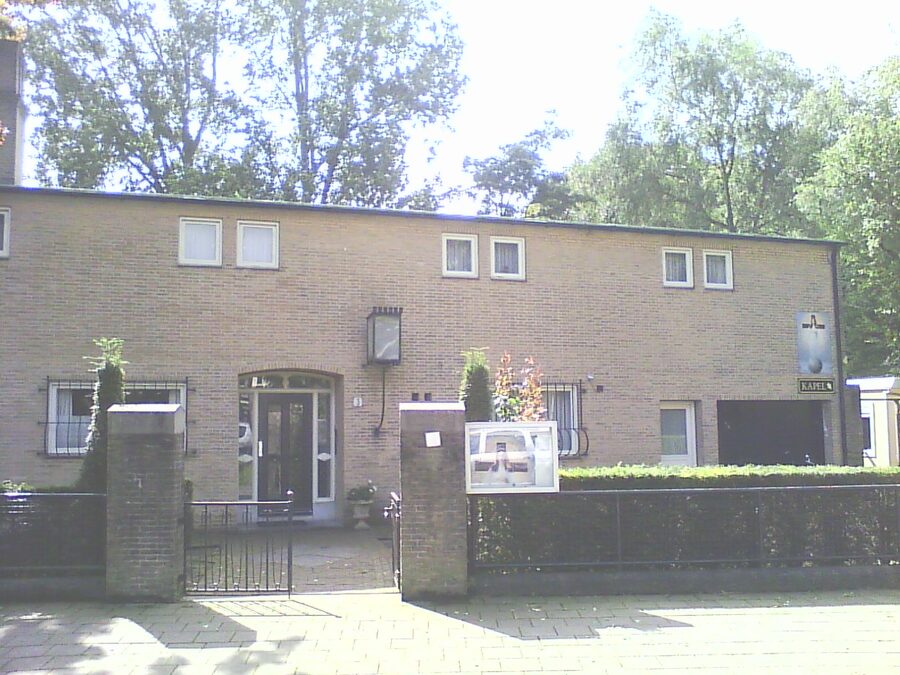
The sanctuary is usually known as Chapel of the Lady of All Peoples (Kapel Vrouwe van alle Volkeren), en Ámsterdam, diócesis de Haarlem-Ámsterdam, Northern Netherlands Province (Netherlands). This is a cult chapel and a diocesan pilgrimage centre, dependent on the authority of the local bishop. It is not known that it has been elevated to minor basilicaor having an official title of National sanctuary; rather it is presented as a place of diocesan pilgrimage. Around the chapel are organized acts of prayer, Eucharistic worship and pilgrimages, especially on the date of the devotional feast and on some Marian days.
Sponsorship and coronation
The Lady of All Peoples does not appear as a canonically proclaimed patron of a specific city, diocese or nation; it is rather a international devotion, driven by groups of faithful who spread it as an intercessor by the and peace among peoples. Therefore, does not contain a specific canonical patronage (by decree of the Holy See or a diocese) in favour of this advocation.
On the canonical coronationthere is no reference to a decree of the Holy See or of the bishop that has carried out a canonical coronation on behalf of the Pope. The sources are limited to showing the image with ornaments and flowers, but not to mention a canonical coronation ceremony recognized by the universal Church. Therefore, for this advocation in Amsterdam does not contain a documented canonical coronation.
Party and devotion
La fiesta devocional principal associated with the Lady of All Peoples is celebrated the 31 May, a date loved by the promoters of devotion and assumed in the local calendar of the chapel as a day of special prayer for the peoples and for the Church. This celebration has a character devotional, not of universal liturgical feast; it is within the framework of the Marian memory of the end of May, traditionally associated with Mary's month.
Devotion is expressed above all by:
– Pilgrimages a la capilla de Ámsterdam, procedentes de los Países Bajos y de otros países, en grupos organizados o de manera individual. – El rezo de la prayer of the Lady of All Peoples, en la forma aprobada tras la intervención de la Santa Sede, que invoca a María pidiendo que “la Señora de Todos los Pueblos” sea nuestra Abogada y ruegue por la venida del Espíritu Santo sobre la humanidad. – Actos de Eucharistic adorationrosaries, Marian vigil and days of prayer for the peace and unity of the Church.
In terms of flow figures, sources do not provide official and consolidated data; therefore, there is no reliable number of pilgrims per year. It does, however, indicate a stable presence of pilgrims and an international spread of devotion through magazines, associations and websites, always under the doctrinal supervision of the diocese and the indications of the Holy See.
Link to the Rosary
No hay una specific historical association of this advocation with a particular form of Rosary (as is the case, for example, in advocations born explicitly from the preaching of the Rosary). However, in the devotional practice of the chapel and of the groups linked to the Lady of All Peoples, the prayer of the Rosary It is an important place as a regular Marian prayer and as a way to accompany Mary's intercession for the Church and the world. The organization of the chapel often proposes the Rosary around the Eucharistic worship and prayer of the Lady of All Peoples, integrating it into the Marian vigil and celebrations.
From a general Marian perspective, the Rosary allows us to contemplate with Mary the mysteries of Christwhich are the very center of the iconography of this advocation: the great cruz behind the Virgin remembers the paschal mystery; the balloon y las sheep They refer to the mission of the Church and to the peoples called to salvation. To pray the Rosary in this devotion helps to maintain a fully ecclesial balance: Mary is invoked as Mother and Lawyerbut always in reference to Christ and in fidelity to the doctrine of the Church, as the Holy See has wanted to emphasize in correcting the formula of prayer and in maintaining the prudent judgment of "non constat de supernaturalitate."
A flower for the Virgin
Offer a simple prayer to this Marian devotion. Pray a Hail Mary for the Netherlands and for world peace.
Pray Hail MaryIs the advocation of the Virgin Mary of your people missing?
Si no encuentras la advocación mariana de tu ciudad o pueblo, cuéntanosla: la investigaremos para ubicarla y darla a conocer en este mapa del amor de la Madre por el mundo.
Propose an apvocation →