
Marian devotion
Our Lady of Zeitún
Egyptian State Patron
Documented history. The apparitions began the night of the 2 April 1968, when a Muslim bus mechanic, Mohamed Farouk Atwa, believed to see a woman trying to throw herself out of the dome of the Coptic Church of Santa Maria in Zeitún. As more people approached and gathered, the figure was recognized as a luminous silhouette of the Virgin Mary on the dome of the temple, which was repeated a few days later and later, often from two to three times a week. The demonstrations continued for several years, with completion dates that the sources place between the end of the 1970 y 1971. Many thousands of people, including Christians of various faiths, Muslims and even civil authorities, went to Zeitún; photographs were taken and the light figure was filmed.
Main data
Origin and history
Documented history. The apparitions began the night of the 2 April 1968, when a Muslim bus mechanic, Mohamed Farouk Atwa, believed to see a woman trying to throw herself out of the dome of the Coptic Church of Santa Maria in Zeitún. As more people approached and gathered, the figure was recognized as a luminous silhouette of the Virgin Mary on the dome of the temple, which was repeated a few days later and later, often from two to three times a week. The demonstrations continued for several years, with completion dates that the sources place between the end of the 1970 y 1971. Many thousands of people, including Christians of various faiths, Muslims and even civil authorities, went to Zeitún; photographs were taken and the light figure was filmed.
The Orthodox Coptic Church opened an official investigation; the Patriarch Cyril VI of Alexandria He set up a commission, which concluded that the apparitions were true manifestations of the Virgin. These were approved by the Orthodox Coptic Patriarch in 1968, and also favourably recognized by the Coptic Catholic Patriarch, Cardinal Stephanos I. The Coptic tradition states that the church was built in a place associated with the stay of the Holy Family in Egypt during the flight of Herod.
Tradition and non-strictly documentary elements. The devotion has collected numerous testimonies of physical cures and spiritual conversions attributed to the intercession of Our Lady of Zeitun, with medical reports that, according to devotional sources, would have verified some cases. Light signs associated with the apparitions are also narrated: flashes in the domes, "doves" of light flying around the figure, fragrance of incense and clouds with human forms. These elements fall within the scope of Pious tradition and the testimonies of the faithfulnot always verifiable with the same degree of historical rigor as the basic facts of the apparition.
The image and the sanctuary
The image. In Zeitún there is no original "image" material directly linked to the apparition, as the Virgin expressed herself as a luminous figure, three-dimensional, whole body, usually bright white on the church dome. On some occasions, according to witnesses, he appeared with the Child Jesus, or accompanied by St. Joseph and a Teenage Jesus. The later iconography usually represents it as Mother of Lightstanding, dressed in white, sometimes with blue cloak or glow, in a prayer or blessing attitude on the temple's domes. These images derive from the visual experience of the apparitions and the Coptic iconographic tradition; there is no single official description, but a devotional consensus.
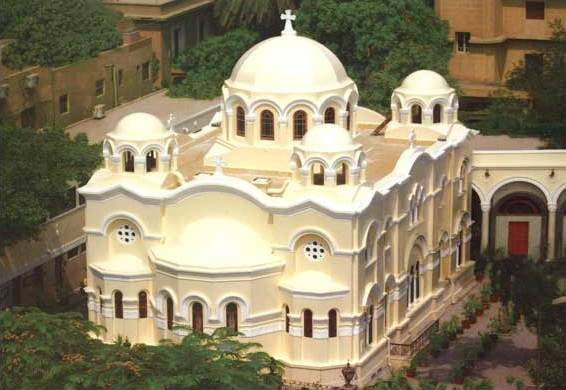
The sanctuary. The place of apparitions is the Orthodox Coptic Church of the Virgin Mary in Zeitúnon the road to El-Matariya in Cairo. The temple was built in the 20th century on the initiative of a lame layman after a dream in which the Virgin asked him to raise a church there, instead of an apartment building. The church is consecrated to the Virgin and commemorates the stay of the Holy Family in the area during her flight to Egypt, according to tradition.
After the apparitions, the place was consolidated as Marian sanctuary of great influx within the Coptic Orthodox Church. Pope Shenouda III ordered another temple to be erected under the title of Our Lady of Zeitun, and a hospital with the same name was built in the vicinity. It is not established in the sources consulted that the sanctuary of Zeitun has received the title of minor basilica on the part of the Holy See, neither a formal proclamation as a national sanctuary in the Catholic field; in praxis, however, it is a place of reference for the Coptic faithful and also for local Catholics and pilgrims.
Sponsorship and coronation
Patronage. Our Lady of Zeitun is especially venerated in the Iglesia Copa Ortodoxa of Alexandria and in the Iglesia Copta Católicawhere it is also known as Mother of Light. It is a Marian reference for the Christians of Egypt and for the Coptic diaspora all over the world, but no consta a formal decree of canonical patronage (for example, as the principal patron of the Egyptian State, a specific Catholic diocese or a particular city) in the sources consulted. In practice, it is an advocation very linked to the memory of the Holy Family in Egypt and to the coexistence between Christians and Muslims who came together to the apparitions.
Canon coronation. In the revised sources (devotional literature, sanctuaries and Marian synthesis pages) does not contain a documented canonical coronation of an image of Our Lady of Zeitun by the Holy See or a delegated authority. No reliable source indicates a year, pontifical decree or officially recognized coronation.
Party and devotion
The main liturgical commemoration linked to this advocation in the Coptic field is the 2 April, anniversary of the first apparition (which in the copy calendar corresponds to the 24 of Baramhat). Patriarch Cyril VI declared this day festive in relation to the apparitions, and Pope Shenouda III kept the memory and spread it, strengthening the cult. Some devotional sources also mention the 30 June as a memory date in Marian spirituality calendars, although the historical core is focused on April 2.
During the years of the apparitions, it is estimated that hundreds of thousands or more than a million people They came to the place, including faithful of various Christian Churches and numerous Muslims. An investigation by the Coptic Church and the civil authorities found the absence of fraud and the inability to explain the phenomenon by purely natural means, which favored the mass influx and the climate of prayer. Night vigil, the prayer of psalms and Coptic Marian hymns, spontaneous prayers for peace and for the sick, confessions of faith and requests for Marian intercession characterized devotion in the place.
Today, the Zeitun shrine continues to receive pilgrims, especially around the anniversary of the first apparition and on important Marian dates of the Coptic Calendar. Devotion especially emphasizes Mary as Mother of Light and protector of the Church in the midst of difficultiesand as a sign of God's closeness to the Egyptian people and to the Middle East.
Link to the Rosary
The specific sources on Zeitún do not mention a particular historical relationship of this advocation with the prayer of the Rosary (no explicit indications in the apparitions, no co-fradies of the Rosary directly linked to the sanctuary). [
A flower for the Virgin
Offer a simple prayer to this Marian devotion. Pray a Hail Mary for Egypt and for world peace.
Pray Hail MaryIs the advocation of the Virgin Mary of your people missing?
Si no encuentras la advocación mariana de tu ciudad o pueblo, cuéntanosla: la investigaremos para ubicarla y darla a conocer en este mapa del amor de la Madre por el mundo.
Propose an apvocation →