
Marian devotion
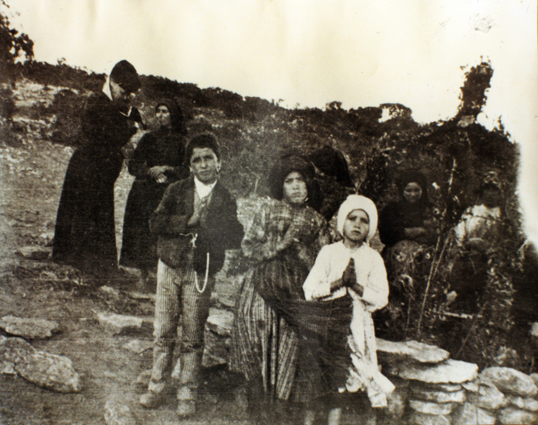
Unknown photographer — Public domain, vía Wikimedia Commons
First of all: its exact canonical state
This is constantly wrong, even in serious publications. All three They're not at the same point.:
| Canon State today (September 21, 2026) | |
|---|---|
| Francisco Marto | SANTO - canonized on May 13, 2017 by Pope Francis, in Fatima |
| Jacinta Marto | SANTA - canonized on the same day |
| Lucia dos Santos (Sister Mary Lucia of Jesus and the Immaculate Heart) | VENERABLE - Decree of Heroic virtues of 22 June 2023. No esta's beta. Beatification requires the recognition of a miracle, which to this day does not contain |
https://www.fatima.pt/pt/pages/oracao-pela-beatificacao-de-lucia, HTTP 200).Lucía dos Santos (1907-2005)
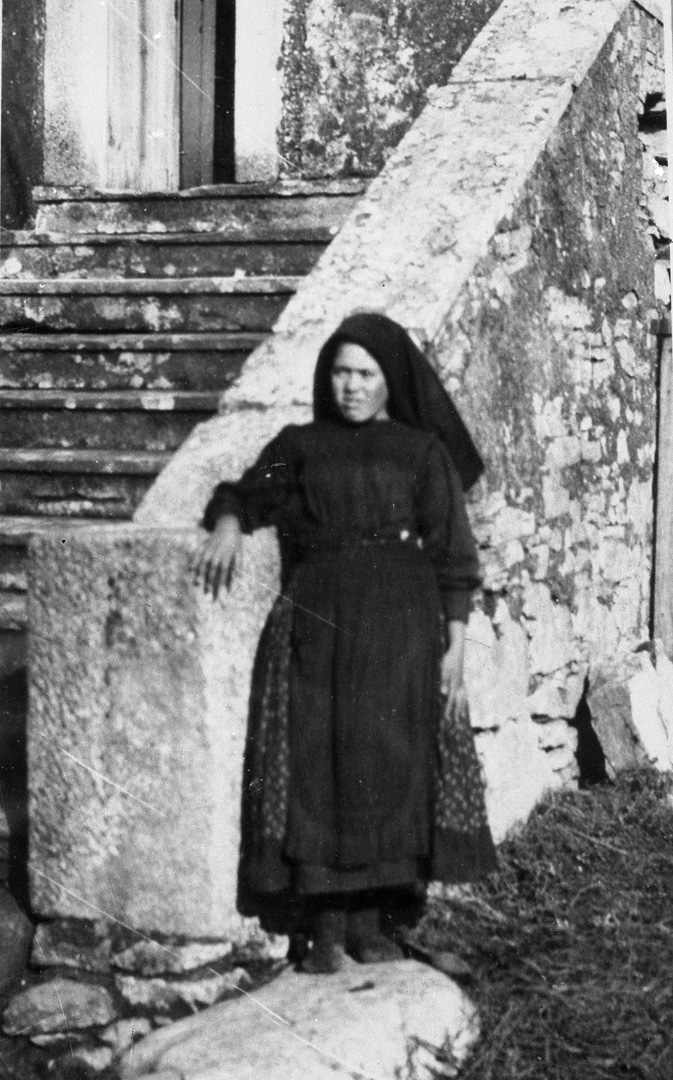
Unknown photographer — Public domain, vía Wikimedia Commons
Date of birth: 28 March 1907, en Aljustre, village of the parish of Fatima.
She was the youngest of seven brothers, daughter of António dos Santos y Maria Rosa. His parents are precisely the subject of his last two Memories: the Fifth (1989) on the father, the Sixth (1993) on the mother.
Chronology of his life, on the official chronology of the Sanctuary
| Date | Done |
|---|---|
| 16-17 June 1921 | He leaves Aljustrel and is admitted in the Vilar Asylum (Oporto), "taking the name Maria das Dores" |
| 25 October 1925 | It enters the postulate of the Doroteas Sisters of Pontevedra (Spain) |
| 10 December 1925 | In Pontevedra, the apparition of the promise of the first five Saturdays |
| 2 October 1926 | Noviciado en Abs (Spain), under the name Maria Lúcia das Dores |
| 3 October 1928 | Temporary votes |
| 13 June 1929 | In Tuy, the vision of the Most Holy Trinity and the request for the consecration of Russia |
| 3 October 1934 | perpetual |
| 17 May 1946 | Sent al Colégio do Sardão (Vila Nova de Gaia) |
| 25 March 1948 | Ingresa en el Carmelo de Santa Teresa de Coimbra |
| 13 May 1948 | Take the habit with the name of Sister Mary Lucia of Jesus and the Immaculate Heart |
| 31 May 1949 | Solemn votes |
| 13 February 2005 | Die in the Carmel of Coimbra, at the age of 97 |
Fuente: cronología anotada de los tres videntes del Santuário de Fátima, https://www.fatima.pt/pt/pages/cronologia-dos-videntes (HTTP 200), que cita asientos de bautismo y defunción y la Critical Documentation.
Your cause of canonization, step by step
1. 17 December 2007 - Benedict XVI grants the dispensation. The Latin decree is more precise than it is said: it does not dispense "five years," but the two missing to complete the quinquennium (‘a tempore duorum annorum expectationis’).
2. 13 February 2008 — decreto de la Congregación para las Causas de los Santos: https://www.vatican.va/roman_curia/congregations/csaints/documents/rc_con_csaints_doc_20080213_luciae_fr.html (HTTP 200).
3. 30 April 2008 - the bishop of Coimbra, Mr Albino Mamede Cleto, opens the diocesan phase.
4. 13 February 2017 — clausura solemne del diocesan Inquirito at the Carmel de Coimbra, chaired by Mr Virgílio Antunes.
5. 22 June 2023 — decree of heroic virtues: VENERABLE. Boletín oficial de la Sala Stampa (PDF verificado, HTTP 200): https://press.vatican.va/content/salastampa/en/bollettino/pubblico/2023/06/22/230622e.pdf, que dice: «the heroic virtues of the Servant of God Lúcia de Jesus e do Coração Immaculado (née Lúcia dos Santos), professed nun of the Order of Descalced Carmelites; born on 28 March 1907 in Aljustrel, Portugal, and died on 13 February 2005 in Coimbra, Portugal».
The woman who wrote everything else
Of the three, only Lucia wrote. And he always wrote by mandate: none of his six Memories was born on his own initiative. This is the introduction of the official edition:
— Memories of Sister Lucia I, « Literary genre of Memories», p. 13. Own translation.
This has a consequence that should always be kept in mind when reading Fatima: almost everything we know about the apparitions we know about her.And we know it twenty, twenty-five, or seventy years later. His own editor, Fr. Joaquín M. Alonso, warns of two things that no diver cites:
— Memories of Sister Lucia I, introduction, pp. 11-12. Own translation.
That doesn't reduce Fatima. What he does is to study it as any historical document is studiedwhich is the only way he can resist.
Francisco Marto (1908-1919)
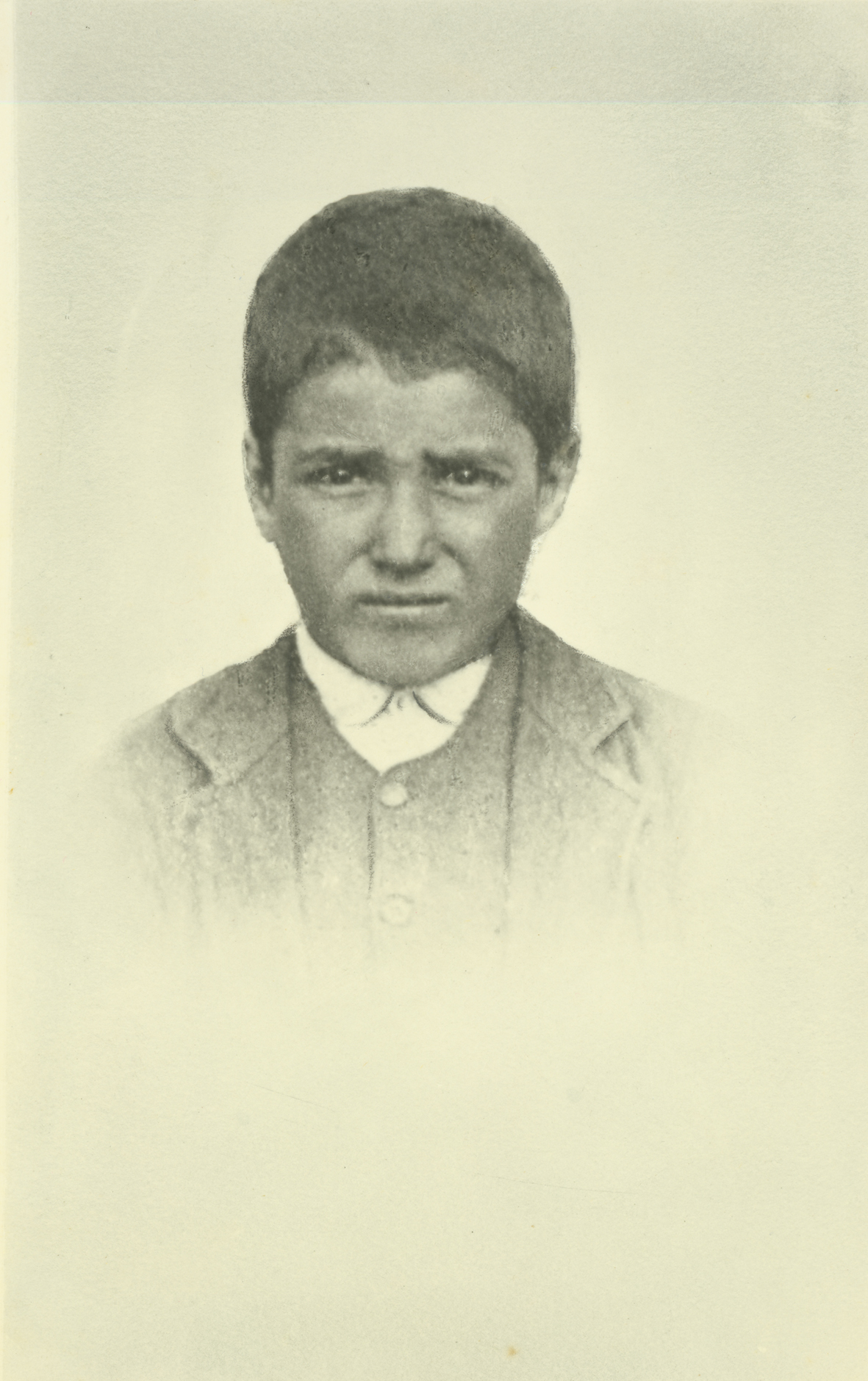
Unknown photographer — Public domain, vía Wikimedia Commons
Birth: 11 June 1908, Aljustrel; baptized 20 June 1908 (seat No. 39 / 1908).
Death: 4 April 1919at his house in Aljustrel, about ten o'clock in the night (seat No. 21 / 1919). I had 10 years.
He died of the 1918 fluthe pandemic that struck Europe. There is nothing miraculous about his death: he died as millions died, and that is part of the strength of his history.
What distinguishes him: Francis did not hear the Lady
This is a documented detail that is always forgotten. Francis saw, but he didn't hear. Everything I knew about the message I knew because Lucia told him. And yet it was not hell or secret that made him the most.
— We were burning in that light that is God, and we were not burning. God! You can't say! You can never say this! But what a shame He is so sad! If I could comfort him!...»
— IV Memoria, Memories of Sister Lucia I, p. 144. Own translation.
John Paul II cited that phrase in the homily of beatification on May 13, 2000:
—
https://www.vatican.va/content/john-paul-ii/es/homilies/2000/documents/hf_jp-ii_hom_20000513_beatification-fatima.html (HTTP 200)."To comfort Our Lord"
The whole spirituality of Francis lies in his response, which was collected by Lucia:
— He preferred to comfort Our Lord. Did you not notice how Our Lady, even the last month, was so sad when she said no more to offend God Our Lord, who is already very offended? I would like to comfort Our Lord and then turn sinners, so that they would no longer offend Him. "
— IV Memoria, p. 154. Own translation.
And his way of praying:
— property.
His other devotion was the Eucharist, to which the three children called "Jesus hidden.":
— IV Memoria, p. 154. Own translation.
Jacinta Marto (1910-1920)
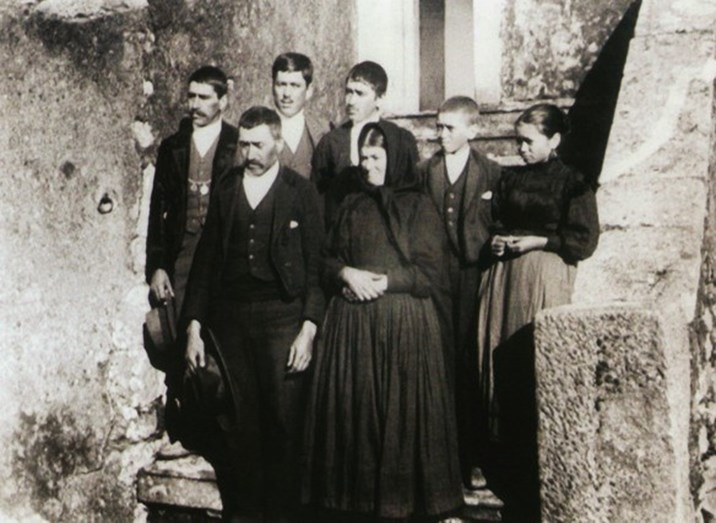
Unknown authorUnknown author — Public domain, vía Wikimedia Commons
Birth (official Vatican date): March 11, 1910.
Death: 20 February 1920, en el Hospital de D. Estefânia de Lisboaaway from his house and family. I had nine years. She was first buried in Vila Nova de Ourém; her remains were then moved to Fatima.
The girl who couldn't stop thinking about hell
Of the three, Jacinta was the one that was most marked by the vision of July 13. Sister Lucia dedicates whole pages to it, and they are of the most impressive of the entire corpus:
— Hell! Hell! What a pity I have of the souls who go to hell! And people there live burning like wood in the fire!
And half a trembling man kneeled, with his hands together, to pray the prayer which Our Lady had taught us:
- O my Jesus, forgive us, deliver us from the fire of hell, bring all souls to Heaven, mainly those most in need. "
— III Memoria, Memories, p. 122. Own translation.
— idem, pp. 122-123.
And a scene where the six-year-old asks and the ten-year-old answers with what she knows:
- It is a cave of bugs and a very large bonfire (as my mother explained to me) and it goes there who makes sins and does not confess and stays there always burning.
- And he never gets out of there again?
— No.
- And after many, many years?
— No; Hell never ends. And neither is Heaven. [...] Don't you see that they are eternal, that they never end? "
- I report, Memories, pp. 44-45. Own translation.
On how to read this without falling into terror or frivolity, see page "Hell, purgatory and heaven in the message of Fatima".
The visions of the Holy Father
Jacinta had, according to Lucia's account, own visions that do not match any of the six apparitions:
— No!
- I don't know what it was like! I saw the Holy Father in a very big house, on my knees, in front of a table, with his hands on his face, crying. There were many people outside the house and some threw stones at him, others threw curses at him and said many ugly words. Poor Father! We have to ask a lot for him. "
— III Memoria, p. 125. Own translation.
And another, in the Loca do Cabeço:
— III Memoria, p. 126. Own translation.
The official edition notes in footnote 15 that, following the revelation of the third part of the secret in the year 2000, "it is better understood why Jacinta recognized the Holy Father in his visions," and refers to the response that Sister Lucia gave to Monsignor Bertone the 27 April 2000:
— Memories, Apéndice III, pp. 216-217. Own translation.
The visions of war
- Can't you see that Heaven can't run away?
- It's true! You can't. But don't be afraid! I, in Heaven, will ask much for you, for the Holy Father, for Portugal, for war not to come here, and for all priests. "
— III Memoria, pp. 126-127. Own translation.
And his death
Jacinta died alone in a hospital in Lisbon on 20 February 1920. I had previously said to Lucia, asked about what she was going to do in Heaven:
- I report, p. 61. Own translation.
The way to the altars of Francis and Jacinta
| Date | Done |
|---|---|
| April 1952 | The Bishop of Leiria opens the diocesan process (extended until 1979) |
| 13 May 1989 | John Paul II declares his virtudes heroicas |
| 28 June 1999 | Super miracle decretum for beatification. The Sanctuary identifies that healing as that of Emília Santos |
| 13 May 2000 | Beatification in Spainby Juan Pablo II |
| 2 February 2017 | The Medical Consultation judges the new healing "inexplicable in the light of medical science» |
| 23 March 2017 | Decree on the Miracle — boletín oficial: https://press.vatican.va/content/salastampa/en/bollettino/pubblico/2017/03/23/170323d.html (HTTP 200) |
| 13 May 2017 | Canonization in Spain, by Pope Francis |
Procedural framework verified at the Litterae Decretales of the canonization, published in * * * Acta Apostolicae Sedis *, vol. CIX (2017), No. 9, pp. 896-898 — PDF oficial: https://www.vatican.va/archive/aas/documents/2017/acta-settembre2017.pdf (HTTP 200).
The approved miracle, según el sitio oficial del Santuario para la visita papal de 2017 (https://www.papa2017.fatima.pt/pt/pages/pastorinhos, HTTP 200):
Canonization formula (AAS CIX / 9, pp. 897-898, in Portuguese in the original):
And in the homily of that day, Pope Francis said something that no page on Fatima should stop quoting, because he puts everything in his place:
—
https://www.vatican.va/content/francesco/es/homilies/2017/documents/papa-francesco_20170513_omelia-pellegrinaggio-fatima.html (HTTP 200).Sources of this page
- Shrine of Fatima, cronología anotada de los tres videntes**:
https://www.fatima.pt/pt/pages/cronologia-dos-videntes(HTTP 200). - Memories of Sister Lucia I — PDF oficial, ficha F002:
https://www.fatima.pt/files/upload/fontes/F002_Memorias1.pdf(HTTP 200). Páginas 11-13, 44-45, 61, 122-127, 144, 154, 216-217. - Acta Apostolicae Sedis, vol. CIX (2017), n.º 9, pp. 896-898:
https://www.vatican.va/archive/aas/documents/2017/acta-settembre2017.pdf(HTTP 200). - Sala Stampa de la Santa Sede, boletín del 22 de junio de 2023 (decreto de virtudes heroicas de sor Lucía):
https://press.vatican.va/content/salastampa/en/bollettino/pubblico/2023/06/22/230622e.pdf(HTTP 200). - Homilies of John Paul II (13-V-2000) and Pope Francis (13-V-2017) in vatican.va (HTTP 200, full Spanish text).
Is the advocation of the Virgin Mary of your people missing?
Si no encuentras la advocación mariana de tu ciudad o pueblo, cuéntanosla: la investigaremos para ubicarla y darla a conocer en este mapa del amor de la Madre por el mundo.
Propose an apvocation →