Marian worship
The Martyrs of Tibhirine: Cistercian Martyrdom in the Maghreb (1996)
Seven monks who chose to stay with their people and gave their lives for love
In the early hours of March 26, 1996, an armed group entered the Cistercian monastery of Notre-Dame de l'Atlas in Tibhirine, Algeria, and abducted seven of its monks. Two months later, on May 21, their heads were found. They had chosen to remain in a land at war when everything urged them to leave. Their martyrdom moved the entire world, and their beatification, celebrated on December 8, 2018, in Oran, confirmed what many already knew: that holiness dwelt in Tibhirine. The connection of these monks with Morocco—through the monastery of Midelt, where their legacy lives on—makes them an integral part of Maghrebi spirituality.
Notre-Dame de l’Atlas, Tibhirine, Argelia
26 de marzo de 1996
21 de mayo de 1996
8 de diciembre de 2018, Orán (Argelia)
Dom Christian de Chergé
Monasterio de Notre-Dame de l’Atlas, Midelt
The Tibhirine Monastery: History and Vocation
The Notre-Dame de l'Atlas monastery was founded in 1938 in the Algerian Atlas Mountains, about 90 kilometers south of Algiers, at an altitude of approximately 1,100 meters. The Cistercian community—belonging to the Cistercian Order of the Strict Observance, known as Trappists—settled on an old French farm and gradually built a monastery of contemplative life in Arab and Berber land.
Tibhirine was never a missionary monastery in the classical sense of the word. The monks did not seek to convert their Muslim neighbors, but rather to live alongside them, work the land with them, and share their daily lives. This vocation of silent presence and deep friendship with Islam was key to the identity of the Tibhirine community. The Algerian peasants in the surrounding area considered the monks their friends, their neighbors, and in some cases, their protectors. The monks, for their part, had found their permanent home in that land and among those people.
The monastery also had a small clinic where Brother Luc Dochier, a doctor as well as a monk, treated the sick of the region free of charge. This specific, free, and quiet service was for decades the most tangible link between the monastic community and the local population. But the monks' presence was much more than a clinic: it was a prayerful, contemplative presence that sanctified the Atlas Mountains with their daily liturgies, with the Divine Office sung in the pre-dawn darkness.
The Seven Monks: Who Were They
The Tibhirine community was made up of monks of different ages, backgrounds and charisms, who had converged on that Algerian mountain by different paths:
Prior. Teólogo del diálogo islamo-cristiano. Había vivido en Argelia de niño y quería morir allí.
Médico. Llevaba décadas atendiendo a los enfermos de la región de forma gratuita. El más anciano.
Hermano laico, plomero. Llegó a Tibhirine siendo ya mayor y encontró allí su lugar.
Monje de vida sencilla y profunda devoción. Conocido por su serenidad.
El más joven del grupo. Dejó un diario espiritual de gran intensidad. Poeta.
Se encontraba de visita en Tibhirine; decidió quedarse con sus hermanos cuando llegó la amenaza.
El más silencioso. Había encontrado en la vida contemplativa magrebí su vocación más honda.
Seven different men, seven different stories, one single choice: to stay. When the GIA (Armed Islamic Group) began threatening foreigners in Algeria in 1993, and when the GIA leaders themselves appeared at the monastery on Christmas Eve of that year, the monks discussed and prayed for months about whether to stay or leave. Father Christian gathered the community in chapter and posed the question with absolute clarity: “Do we stay?” The answer was a unanimous yes. Staying was their calling. Leaving would have been betraying their people.
The Algerian civil war: the context of martyrdom
To understand Tibhirine's martyrdom, it is necessary to understand the historical context in which it occurred. Algeria experienced one of the bloodiest and darkest conflicts in its modern history during the 1990s. Following the interruption of the electoral process in January 1992, when the Islamic Salvation Front (FIS) was on the verge of winning the legislative elections, the army canceled the process and declared a state of emergency. This decision unleashed a spiral of violence that would last for almost a decade.
The GIA (Armed Islamic Group), the most radical faction of Algerian Islamism, launched a campaign of terror specifically targeting foreigners residing in Algeria. Between 1993 and 1996, dozens of foreign nationals were murdered. The monks of Tibhirine knew full well that they were being targeted. Father Christian had already written his spiritual testament, sealed it, and entrusted it to his family, to be opened only after his death.
The exact responsibility for the monks' deaths has been the subject of historical and legal debate for decades. The GIA claimed responsibility for the kidnapping and subsequent murders. But later investigations, including those of French judge Marc Trévidic, have cast doubt on this official version and pointed to the possibility that the monks died in the crossfire or during an Algerian military operation. The full historical truth has not been established with certainty to this day.
The kidnapping and martyrdom (March-May 1996)
In the early morning of March 26, 1996, an armed group entered the Tibhirine Monastery. Two monks who were not in the infirmary that night—Father Amédée Noto and Brother Jean-Pierre Schumacher—were not kidnapped and survived to bear witness. The remaining seven were taken from the monastery and led to an unknown location.
For weeks, the kidnapping generated intense diplomatic activity. The French government negotiated without success. The international community waited. In Cistercian monasteries around the world, and in many churches and families, prayers were offered ceaselessly for the monks of Tibhirine. Father Amédée, a survivor, traveled the world bearing witness to his brothers.
On May 21, 1996, two months after the kidnapping, the GIA announced that it had executed the seven monks, and their heads were found by the roadside near Medea. Their bodies were never recovered. The seven heads were buried in the cemetery of Tibhirine Monastery, where they remain to this day. The world received the news with shock and grief. Pope John Paul II expressed his sorrow and paid tribute to the martyrs.
— Dom Christian de Chergé, spiritual testament, January 1, 1994
The spiritual testament of Dom Christian de Chergé
Dom Christian de Chergé had written his spiritual testament on January 1, 1994, two years before his martyrdom. He had sealed it and given it to his family with the instruction that it should be opened and read only after his death. When it was read publicly in June 1996, it caused a profound stir throughout the Christian world and beyond. It is considered today one of the most luminous texts of contemporary martyrdom.
In that text, Dom Christian anticipates his own death with serene lucidity and offers it as a gift. But the most surprising—and the most sublime—paragraph is the one in which he addresses the man who could be his assassin. He calls him his "last-minute friend." He tells him that he could not wish this sudden discovery upon him, for God himself will have looked upon him with more mercy than he could have. He even thanks him for having been the instrument of his final encounter with God.
This text is the fruit of years of spiritual maturation, of profound dialogue with Islam, of contemplation in the silence of the Atlas Mountains. Dom Christian had studied Arabic and Islamic theology. He had close Muslim friends with whom he shared life and prayer, each within their own tradition. For him, dialogue with Islam was not an intellectual program or a pastoral strategy: it was a life experience, a path of mutual sanctification. His testament is not the gesture of a man who accepts death reluctantly: it is that of someone who has understood that his life, for a long time now, has been a total offering.
The 2018 beatification: the Church recognizes martyrdom
On December 8, 2018, the Feast of the Immaculate Conception, Pope Francis authorized the beatification of nineteen martyrs of Algeria at the Cathedral of Our Lady of the Holy Cross in Oran. The seven monks of Tibhirine were beatified along with twelve other martyrs who had given their lives in Algeria during the years of the civil war: nuns, priests, and a bishop. Cardinal Angelo Becciu presided over the ceremony on behalf of the Pope.
The choice of December 8th was not accidental. The Immaculate Conception, patroness of the universal Church, also presides over the Tibhirine Monastery: Notre-Dame de l'Atlas. Under the mantle of the Virgin Mary, those monks had lived and prayed; under that same mantle, they were now raised to the altars. The ceremony was solemn, profound, and marked by the presence of representatives of Algerian Islam who also wished to honor the memory of those men of God.
La película De dioses y hombres (Dieu et les hommes, 2010), dirigida por Xavier Beauvois, había contribuido enormemente a difundir el conocimiento del martirio de Tibhirine en todo el mundo. La película obtuvo el Gran Premio del Jurado en el Festival de Cannes de 2010 y fue nominada al Oscar a la mejor película de habla no inglesa. Con una sobriedad visual y narrativa excepcional, la película retrata los últimos meses de vida de los monjes, su deliberación interior, su miedo y su paz, su arraigo en la liturgia y en la tierra. Es uno de los testimonios cinematográficos más poderosos sobre la santidad monástica del siglo XX.
8 de diciembre de 2018 — Inmaculada Concepción
Catedral Nuestra Señora de Santa Cruz, Orán (Argelia)
12 mártires más de la guerra civil argelina
De dioses y hombres, Gran Premio Cannes 2010
The Midelt Monastery: A Living Legacy in Morocco
The connection between the martyrs of Tibhirine and Morocco is not merely historical or geographical: it is a living connection, sustained in the present. The monastery of Notre-Dame de l'Atlas is not only the one in Tibhirine, Algeria: there is also, and still active, a monastery of the same name in Midelt, in the heart of Morocco, in the Moroccan Atlas Mountains.
When the security situation in Algeria deteriorated dangerously in the early 1990s, the Tibhirine community established a kind of sister house or emergency house in Midelt. After the martyrdom of 1996, some monks from the community, along with others who joined later, chose to continue the Cistercian monastic life in Morocco, under the same patronage: Our Lady of the Atlas. The Midelt monastery is today the living custodian of the Tibhirine charism: the same contemplative life, the same spirit of friendly presence in Muslim lands, the same silent dialogue with Maghrebi Islam.
The community of Midelt also welcomes oblates and visitors who wish to make a spiritual retreat in this atmosphere of silence and beauty. The monastery is nestled within the human and geographical landscape of the Moroccan High Atlas, between the mountains and the Berber valleys. As in Tibhirine, the monks of Midelt do not seek to convert their neighbors: they seek to live alongside them, to be a prayerful presence in this land, a silent witness to the Gospel.
Furthermore, in Algeria itself, the Tibhirine monastery was taken over in 2018 —coinciding with the beatification— by a small community of the Community of Sant'Egidio, who wanted to keep alive the memory of the martyrs in the place where they lived and prayed.
The "dialogue of life": the spirituality of Dom Christian
The figure of Dom Christian de Chergé has acquired in recent decades a dimension that transcends martyrdom. Today, he is a theological and spiritual reference point in debates on Christian-Muslim dialogue. His proposal, which he himself called a "dialogue of life," was not a debate confined to the drawing room or academic conferences: it was a commitment to real, everyday coexistence, in which two religious traditions respect each other without dissolving their differences.
Dom Christian had learned classical Arabic and spoke the language of the Quran fluently. He had devout Muslim friends, among them a neighbor named Mohammed with whom he shared years of friendship and conversation. In Tibhirine, he founded the Ribat-es-Salam ("bond of peace"), a small mixed prayer group where Christians and Muslims met regularly to pray in silence and share their sacred texts, each from their own tradition. Not to syncretize them, but to respect them at their core.
This spirituality has deep roots in the tradition of the Church in the Maghreb: in the writings of St. Augustine, in the example of the early North African martyrs, in the presence of the Desert Fathers, and in the witness of Blessed Charles de Foucauld, who also lived in the Sahara and also gave his life in Muslim lands. Dom Christian knew this tradition well and considered himself its heir.
— Dom Christian de Chergé, spiritual testament, January 1, 1994
Spiritual reflection: the seed and the fruit
“Unless a grain of wheat falls into the earth and dies, it remains alone; but if it dies, it bears much fruit” (John 12:24). This passage from the Gospel of John has been read throughout the centuries as the key to Christian martyrdom. The martyr is the grain that falls. The fruit is the life that springs from their death. In the case of the monks of Tibhirine, the fruit is visible and abundant: millions of people around the world have learned their story, meditated on Dom Christian’s testament, and paused to ask themselves what it means to give one’s life for love.
The example of Tibhirine resonates especially today, in a world marked by mistrust between cultures and religions, by fear of the other, by the temptation to build walls. The monks of Tibhirine chose the opposite: to lower the walls, open the doors, and trust their neighbors. This choice cost them their lives. But it is also their most profound testament: that faith does not fear encountering the other, that love is stronger than fear, and that it is possible to live in peace in the land of another religion.
The monastery of Midelt, in Morocco, is today the tangible sign that this commitment did not die in 1996. It lives on in the silence of the Moroccan Atlas Mountains, in the morning prayer of a small community of monks who continue, in the same spirit, the vocation of their martyred brothers. Notre-Dame de l'Atlas: Our Lady of the Atlas. The Virgin Mary presides over this monastery, as she did over that of Tibhirine. Under her gaze, the monks pray, work, and wait.
Discover other testimonies of holiness in the Maghreb and North Africa
Africa — Marian devotions🙏 Blessed martyrs of Tibhirine, witnesses of love to the extreme, pray for us.
Accompanying image
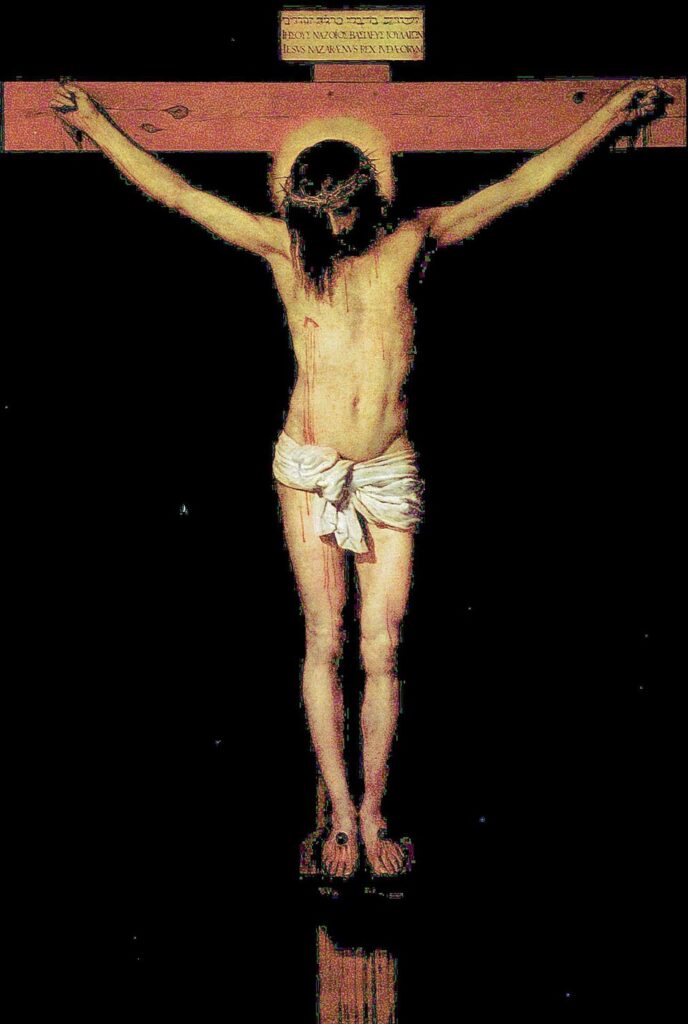
The image is thematic and does not replace the historical documentation of the place.
Image credit
Immaculate Conception, Diego Velázquez, 1618. Work in public domain; reproduction from Wikimedia Commons. Thematic image when it does not represent the place described.
Is the advocation of the Virgin Mary of your people missing?
Si no encuentras la advocación mariana de tu ciudad o pueblo, cuéntanosla: la investigaremos para ubicarla y darla a conocer en este mapa del amor de la Madre por el mundo.
Propose an apvocation →