
Anecdotes about the Virgin Mary
"The scars of the Black Madonna of Czestochowa"
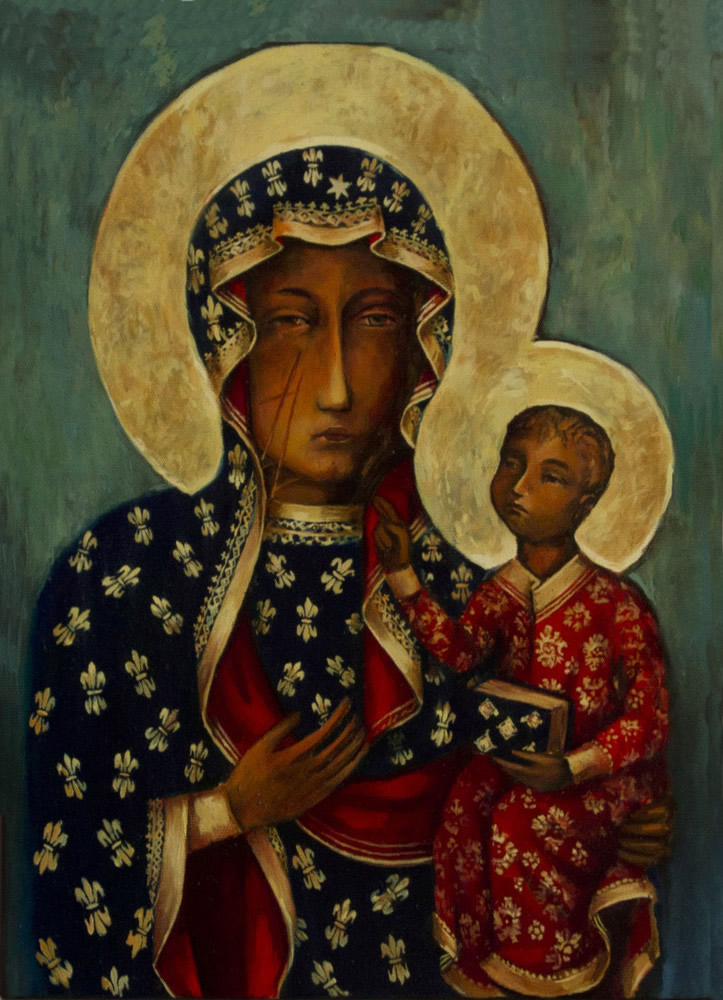
En el monasterio de Jasna Góra, la «Montaña luminosa», se venera desde el siglo XIV uno de los iconos marianos más queridos del mundo: la Virgen Negra de Czestochowa, llamada en polaco Czarna Madonna. Es un icono bizantino del tipo Odigitria, «la que muestra el camino», y se ha convertido en símbolo de la identidad católica de Polonia entera.
Pious tradition holds that the image was painted by Saint Luke the Evangelist on a table belonging to the Holy Family. It is best to state simply what history allows us to affirm: the artist is unknown, and art studies place the painting in the medieval period, having arrived at Jasna Góra in 1382. The attribution to Saint Luke, therefore, belongs to the realm of beautiful legend, not historiography.
What did leave a visible mark was the looting of 1430, when groups linked to the Hussites stormed the sanctuary and damaged the icon. Two long, parallel incisions and a third, smaller one were left on the Virgin's right cheek, with marks also on her neck.
That is why it was decided to leave them visible forever, as a sign of a Mother who shares the suffering of her people. The flowing blood and the reappearance of the wounds are devotional imagery, but the scars are truly there, in full view of all who make the pilgrimage to her.
A flower for the Virgin
Give thanks to the Virgin Mary for her love. Pray a Hail Mary remembering this story.
Pray Hail MaryIs the advocation of the Virgin Mary of your people missing?
Si no encuentras la advocación mariana de tu ciudad o pueblo, cuéntanosla: la investigaremos para ubicarla y darla a conocer en este mapa del amor de la Madre por el mundo.
Propose an apvocation →